

KATHMANDU: While marrying, Pampha Darjee did not ask about the place of origin of her husband. Her sewing skills and the support of her husband were sufficient for a living.
However, following the death of her life partner, she began struggling to establish her identity and obtain citizenship.
She is living without citizenship in a country where she was born. She could neither obtain citizenship certificate nor pass on her lineage to her children and grandchildren. “We, the entire three generations, are not the citizens of this State. We are stateless,” she said.
Recalling her past, she said she got married a man who appeared in the village where her maternal was located. Her family was not economically well-off.
Impressed by the man’s sewing skills, Pampha’s family decided to accept him as one of their own and arranged the marriage with Pampha, the eldest daughter among the 10 children.
The couple lived happily, until the man passed away. After years of marriage, the couple shifted to Kathmandu in search of better opportunities. It has been already over two decades since her life partner passed away. In absence of the citizenship, she could not proceed with securing the birth registrations and citizenships for her children, and now her grandchildren also face similar fate. They have been deprived of opportunities to attend schools, too.
“I am the citizen of this state. I born here, grew up here, and continue to live here. Why am I not granted the citizenship?” I need an answer of this question,” she said in an emotional tone.
“I fear that the third generation may also have to live their entire lives without citizenship,” Pampha said.
She frequently approached the administrative offices seeking a solution, but all her efforts were in vain. According to her, she was born in 2025 BS.
In absence of citizenship, neither of her two sons could attend the schools nor explore employment opportunities.
They do not have bank accounts. Her sons, who worked as daily-wage earners, were forced to quit their jobs because they did not have citizenship certificates. They have neither reliable support nor any means for livelihood and have access to the various state facilities.
Her maternal family also tried to facilitate her in acquiring citizenship. However, the local administration did not entertain their request to issue citizenship for her under her parents’ identity, citing the fact that was already married and supposed to obtain it in her husband’s name. Officials suggested that she apply for citizenship through her husband’s side. But she did not know where her husband was originally from. “Now, where should I go?” she asked.
‘When will we have our citizenship?’
Sanjaya Rai, who spent his life on the streets as a child, is still without citizenship even as he reaches his teenage years.
He has not been able to get a citizenship because his relatives cannot be identified. Somehow, he became a taekwondo player and even got a job of a taekwondo instructor at a school. But he said that not having citizenship certificate has made it difficult for him to receive his pay.
The TikTok account he has been running is also under someone else’s name. He complains that the 500 thousand rupees sent to that account were also kept by someone else. Rai mentioned that he was forced to get the SIM card for the mobile he uses in someone else’s name as well.
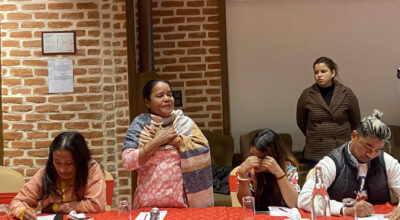
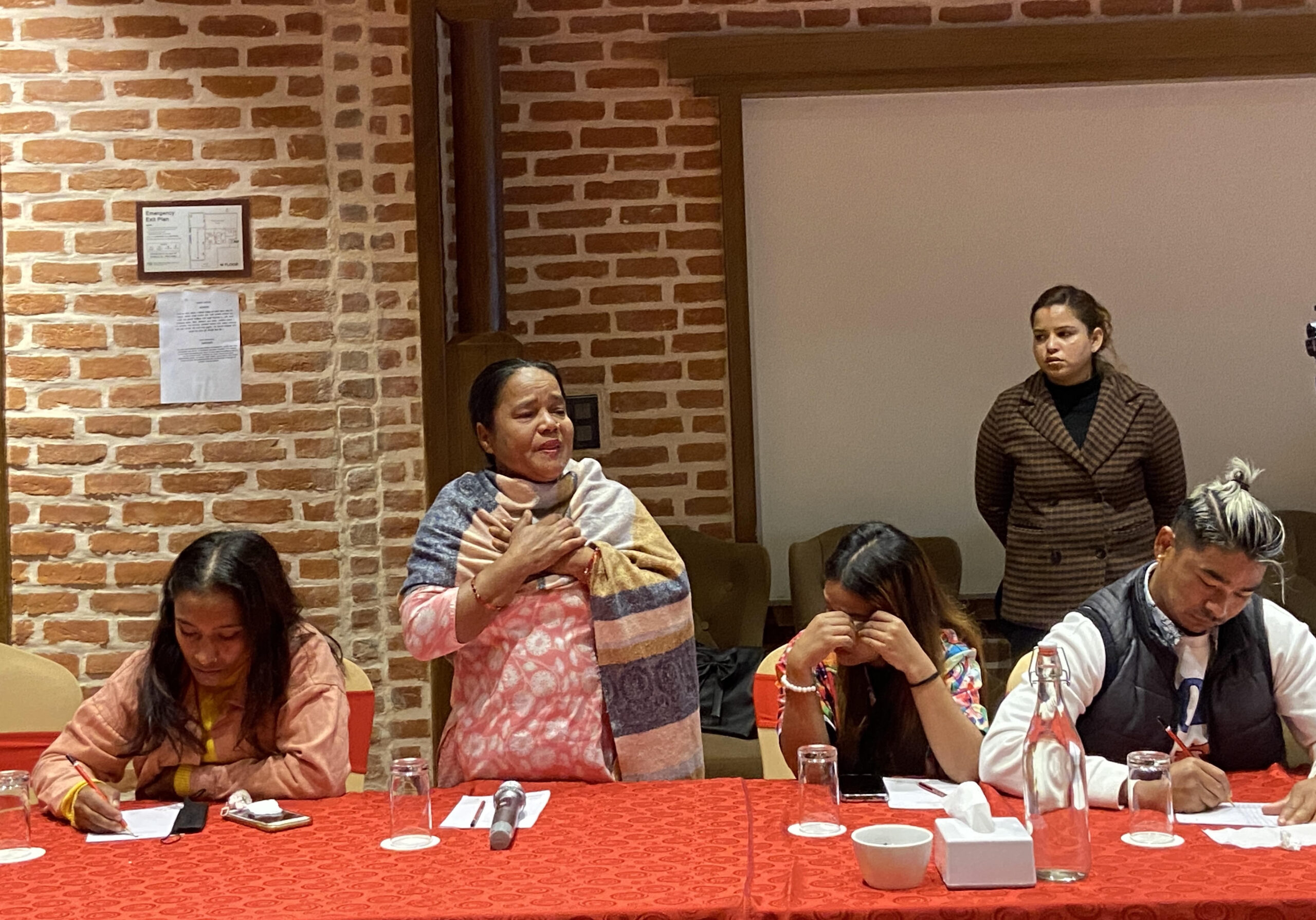
“What other irony is there if you cannot even open a bank account because you don’t have citizenship?” he asked. At the programme organized with support from Saathsaath, he asked the members of parliament, “Honorable MPs, when will we get our citizenship?”
Anju Gurung, like Sanjaya, is without citizenship certificate. She spent her childhood on the streets in the Pashupati area. Anju got married as a teenager, and her husband is also a street dweller.
Neither the husband nor the wife has citizenship. “If I had the citizenship, I would have gotten a job. The future would have been bright. Right now, we are living in darkness. We have neither identity nor respect,” she said.
According to a recent survey on street children conducted by the organization, 93 percent of the 150 street kids have no information about birth registration. A majority of the respondents understand birth registration more as a means to get citizenship and employment rather than as a fundamental right, according to the survey’s findings.
The survey mentions that 65 percent of the respondents did not have documents identifying their parents, and 35 percent were related to cases where the father was unidentified or missing and those related to marital status.
Similarly, the survey shows that 45 percent of people do not have any ID or documents, so they’re excluded from formal employment and government services.
The organization has also categorized cases without birth registration. According to this, there are three cases involving cohabiting couples, 25 cases of polygamy, 45 cases where neither parent’s documents are available, 65 cases where the father’s documents are missing, 27 cases where the mother’s documents are missing, 45 cases where the father is missing, and five cases involving the identification of foreign fathers.
MP Madhusudan Chaulagain, a member of the Law, Justice and Human Rights Committee, said that citizenship is a fundamental right, so no citizen should be deprived of it.
He believes that in cases where documents are not certified and the guardian’s identity is not established, there should be a provision for a temporary identification card to help citizens live more easily. Chaulagain expressed his commitment to initiating efforts to prepare procedures by discussing necessary matters in the committee to make the citizenship distribution process smoother.
“Everyone should get a natural right like citizenship. There is a law for this. We will work in the committee to make it even simpler,” said MP Chaulagain.
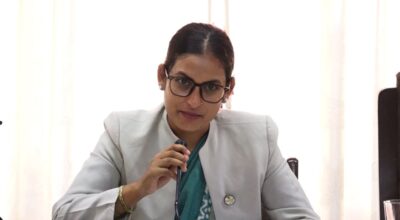
Rights activist and executive of the organization, Kavita Shah, said that even though there are legal provisions to obtain citizenship and birth registration, the practical implementation is complicated, so ordinary people haven’t been able to access the services easily.
“The law is good enough. But many young people are forced to be non-citizens due to weakness in its practical implementation,” she said.