


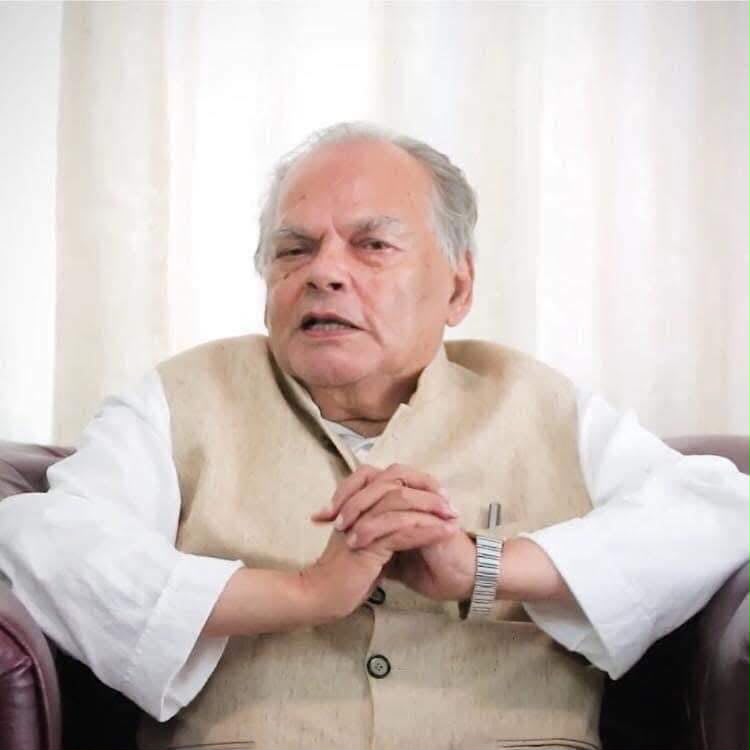
KATHMANDU: Nepali Congress leader and former home minister Govinda Raj Joshi was allowed to return home after appearing before the Special Court to serve a corruption sentence, following a split opinion among the court’s judges.
A bench comprising Justices Narayan Prasad Paudel, Hemant Rawal and Umesh Koirala differed over whether Joshi, who is over 75, was required to surrender to prison before seeking a reduction in his sentence.
Judges Paudel and Koirala held that Joshi did not have to enter prison to receive the sentence-relief provision available to senior citizens. Justice Rawal disagreed, arguing that he should first serve the sentence and apply for the relief from prison.
The majority view was implemented, allowing Joshi to leave the Special Court without being sent to prison.
The Supreme Court had sentenced Joshi to nine months in prison and a fine of Rs 6.926 million in its final ruling dated August 13, 2024. Joshi appeared before the Special Court to seek implementation of the sentence and relief under the Senior Citizens Act, 2063.
The Special Court had originally sentenced him to 18 months in prison and a fine of Rs 216.14 million, but the Supreme Court later partially overturned the punishment.
Under Section 12 of the Senior Citizens Act, citizens aged 75 or above may receive up to a 75% reduction in a prison sentence, depending on their age and the nature of the offence. The majority judges noted that Joshi had crossed the 75-year threshold and had also recently returned from treatment at Medanta Hospital in New Delhi.
The majority further held that although the Prevention of Corruption Act requires people convicted of corruption to serve prison sentences, the Senior Citizens Act is also a special law and does not prevent eligible senior citizens from receiving sentence relief.
The majority also considered that Joshi had already spent three months and 17 days in detention during the investigation and trial process. The judges noted that he had appeared before the court as required and had submitted himself to the court’s jurisdiction.
Justice Rawal, however, maintained that the sentence-relief provision should apply only after a convicted senior citizen had surrendered and begun serving the sentence. His view remained in the minority. As a result, Joshi was not taken into custody and returned home following the Special Court’s order.