



KATHMANDU: Nepal’s liquefied petroleum gas (LPG) suppliers are facing allegations of overcharging consumers by selling cooking gas at the full retail price directly from their plants, despite bypassing dealer commissions and local transportation costs, as a nationwide supply shortage continues.
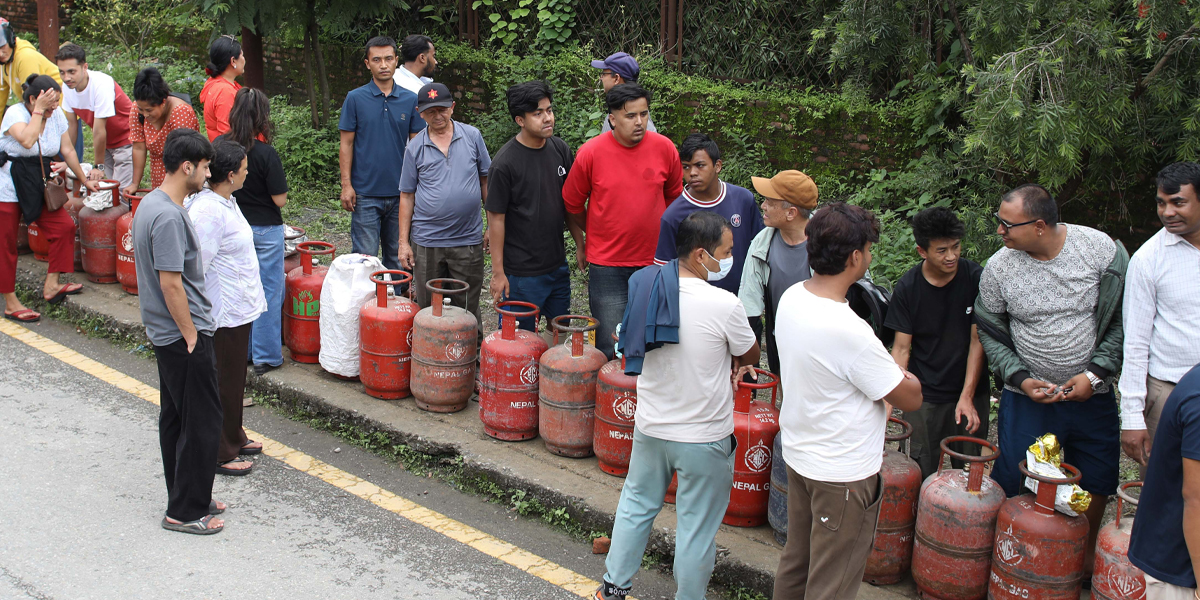
With LPG becoming increasingly difficult to obtain through authorised dealers, consumers have been flocking to gas plants and temporary distribution centres. However, industries have continued charging the official retail price of Rs 2,060 per cylinder, prompting criticism from consumer rights advocates and gas dealers.
Consumer rights campaigner Madhav Timilsina said industries are unfairly profiting by charging retail prices even when consumers purchase cylinders directly from factory gates.
“If consumers buy directly from an industry, they should receive at least a Rs 90 discount per cylinder because dealer commissions and local transport costs are not incurred,” Timilsina said. He urged regulatory authorities and the Nepal Oil Corporation (NOC) to intervene and provide immediate price relief.
The Nepal LPG Dealers’ Federation echoed the concern. Its Vice President Bishnu Dulal said the official retail price includes a 2.75% dealer commission, equivalent to around Rs 50 per cylinder after VAT, which should not be charged when industries sell directly to consumers.
“In addition, consumers should also be exempt from local transportation costs of around Rs 40 per cylinder,” Dulal said, accusing industries of forcing customers to wait in long queues while collecting the full retail price.
Temporary LPG distribution centres have been set up in Teku, where Nepal Gas, Everest Gas, Sugam Gas, HP Gas and Shriram Gas are selling cylinders delivered directly from their plants. Consumers purchasing from these centres should also receive a discount, Dulal argued.
However, NOC Director and LPG Department Chief Binita Mani Upadhyay said the corporation’s immediate priority is ensuring uninterrupted gas supplies rather than revising prices.
“Our first priority is to make sure consumers receive LPG, whether through dealers or directly from industries,” Upadhyay said. “This is not the time to intervene in pricing.”
Poor planning blamed for worsening shortage
Industry officials and consumer advocates have also blamed the Nepal Oil Corporation for worsening the supply crunch through poor planning.
According to gas entrepreneur Rajendra Dallakoti, the corporation resumed the distribution of full-weight LPG cylinders from July 16 (Shrawan 31) after supplying half-filled cylinders for about four months. The move released around 4 million empty cylinders into the market at once, causing a sudden spike in demand.
Dallakoti, who operates Sai Baba Gas and Shree Krishna Gas, said many consumers are refilling spare cylinders out of fear that supplies could deteriorate further, creating artificial demand.
“Current import volumes are sufficient if consumers avoid panic buying,” he said, adding that gas imports have actually increased compared to previous months.
According to NOC, more than 15 million LPG cylinders are currently in circulation across Nepal. Corporation spokesperson Manoj Thakur said imports remain stable and there is no disruption in supplies from the Indian Oil Corporation (IOC).
“The problem is not imports but consumer behaviour,” Thakur said. “Many households are trying to refill every empty cylinder they own, creating pressure on the distribution system and making the shortage appear worse.”