



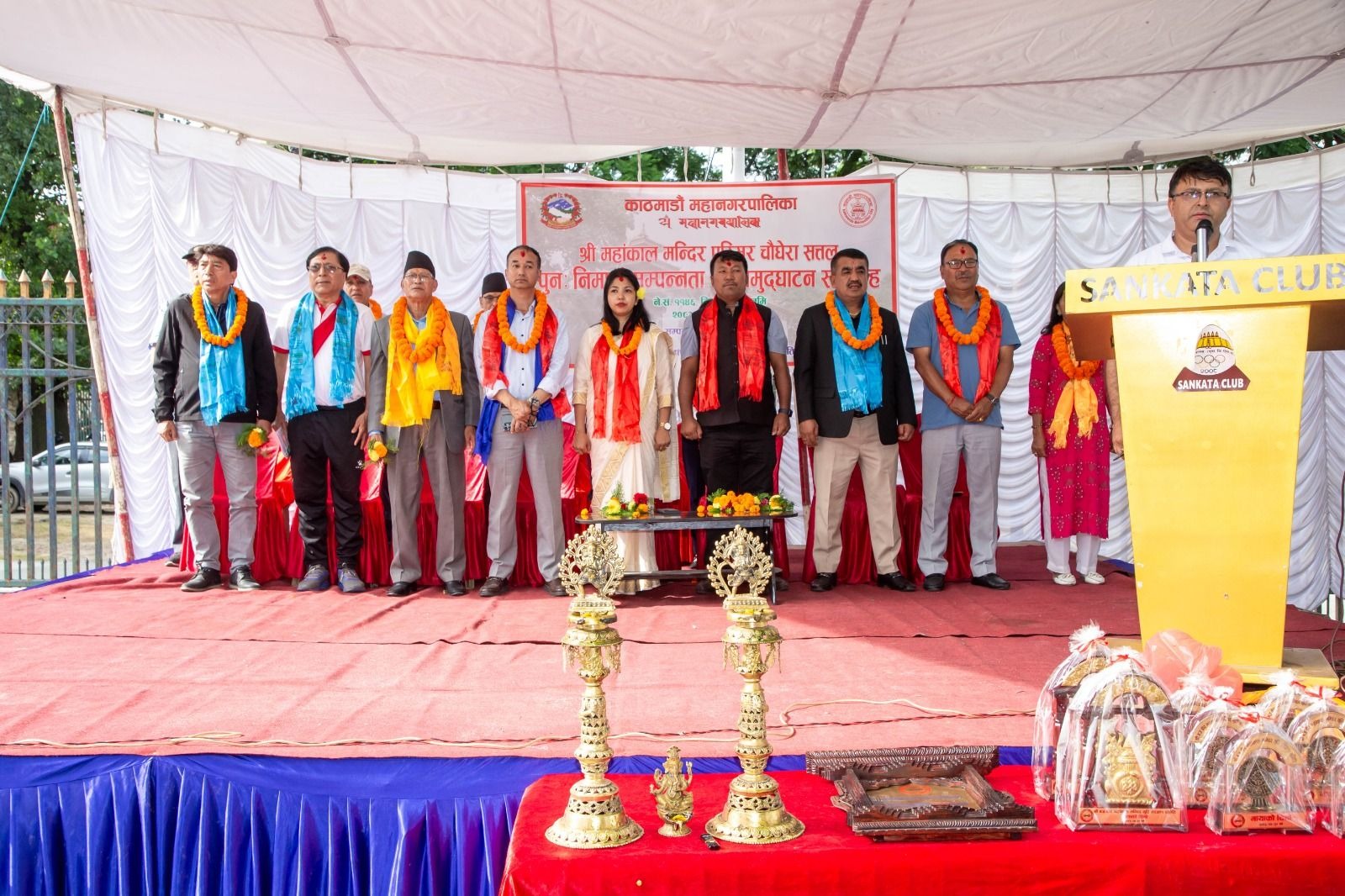
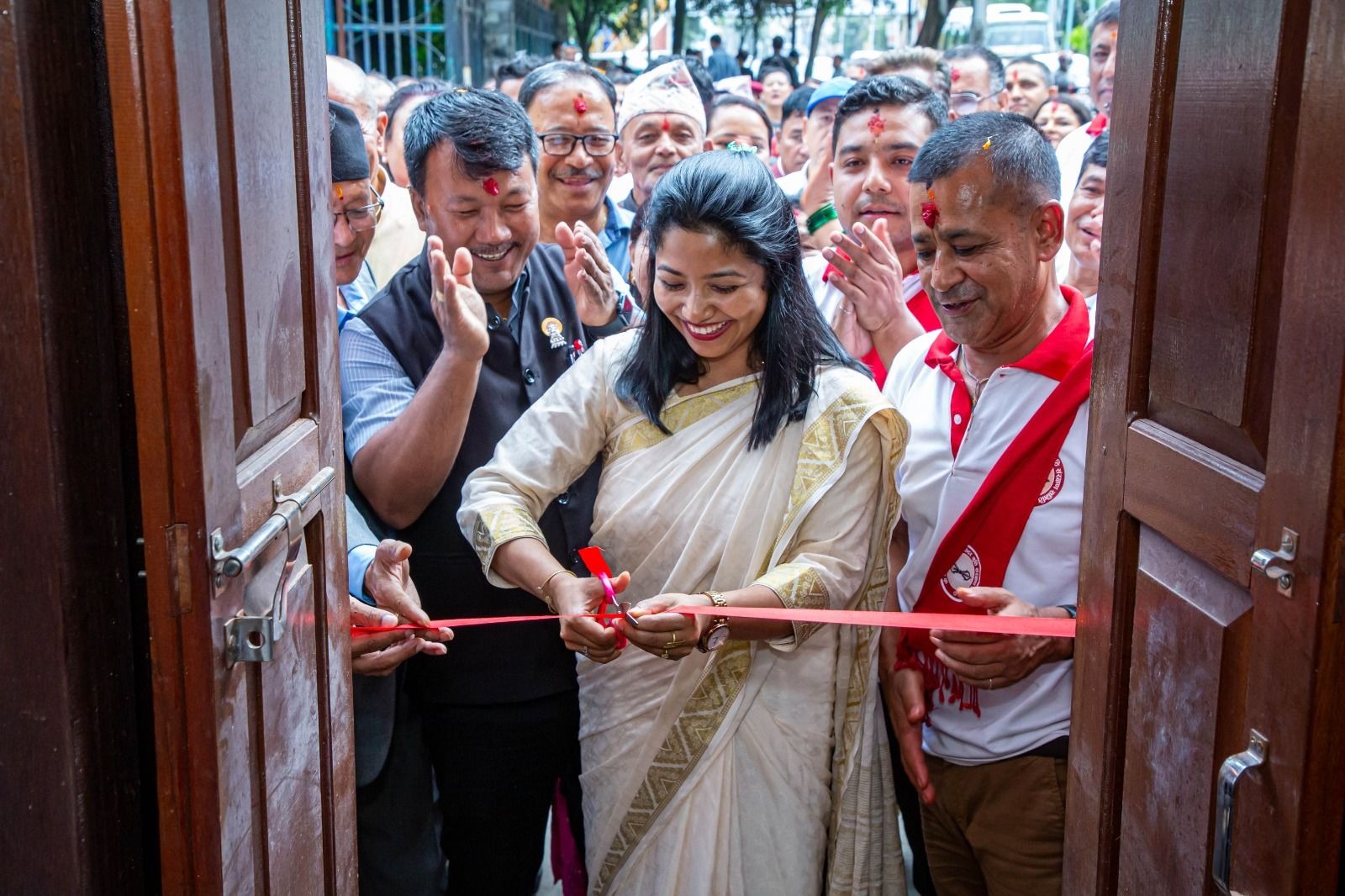
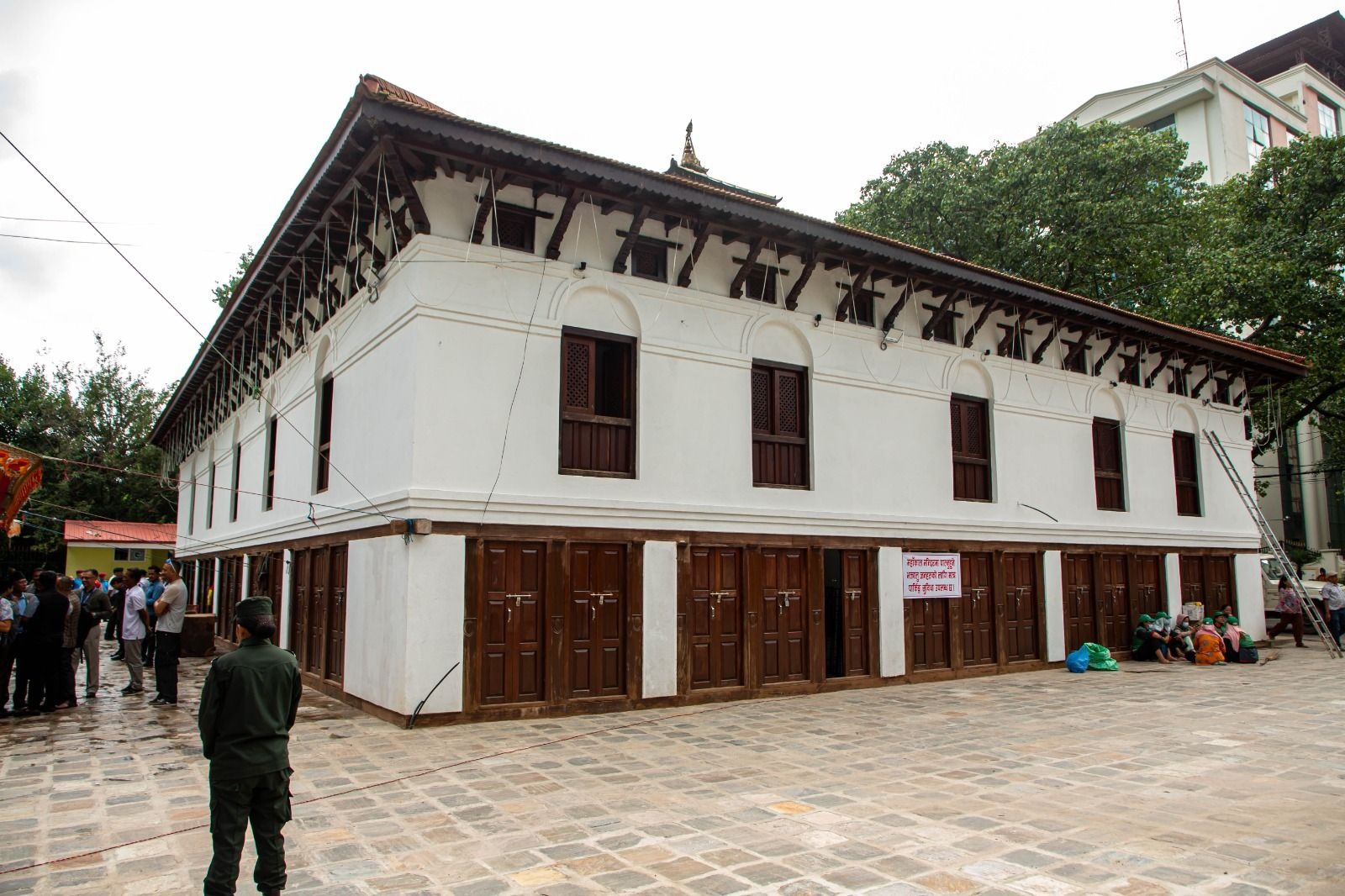
KATHMANDU: Kathmandu Metropolitan City has inaugurated the reconstructed Chaughera Sattal in the Mahankal Temple complex, a heritage structure damaged in the 2015 earthquake.
Acting Mayor Sunita Dangol inaugurated the restored monument on Friday. Reconstruction began on December 9, 2024, and was completed at a cost of Rs 89.4 million.
Speaking at the ceremony, Dangol said the rebuilt structure should be protected with the same care as one’s own home and stressed that local communities, Guthi Sansthan, government offices and devotees should share equal ownership of the heritage site.
She said the metropolis was ready to hand over the structure to the Guthi Sansthan, but emphasized that its future use must be clearly defined. “We cannot agree to commercial activities in monuments built with taxpayers’ money. Such places should be used for religious, cultural and social purposes,” she said.
Dangol also highlighted the role of local residents in reopening long-blocked drainage channels in the area and expressed hope that facilities such as toilets for devotees would be developed through coordination among stakeholders.
Heritage and Tourism Committee Coordinator Aashaman Sangat said the metropolis was committed to preserving the spirit of heritage zones and could not remain a spectator while historic monuments deteriorated.
Ward No. 22 Chairperson Chinikaji Maharjan described the project as an example of how cooperation and coexistence could help resolve disputes surrounding ancient monuments.
Department of Archaeology Director General Saubhagya Pradhananga praised the metropolis for carrying out substantial work in cultural heritage conservation. Guthi Sansthan Deputy Administrator Rajendra Dahal said the reconstruction had restored the grandeur of the sattal and expressed hope that the structure would soon be transferred to the institution.
The original estimated cost was Rs 101 million. After variations during construction, the agreement was revised to Rs 89.73 million.
The reconstruction was based on a 1939 photograph and used traditional materials and techniques, including Dachi Appa bricks, timber work, a Jhingati tiled roof, flagstone paving and improved drainage systems.
The rebuilt structure covers 583.81 square metres. The ground floor contains nine rooms, while the first floor has three assembly halls, one room and one storage room, with an attic above.
Mahankal’s religious significance
Mahankal, worshipped as a form of Kal Bhairav, is revered by both Hindu and Buddhist communities and is believed to have been established about 1,305 years ago.
According to temple chief priest Dipakharsha Bajracharya, local legend links the temple’s origin to a tantric master who invoked Shiva to remain in Nepal for the peace and well-being of the people. The belief that Mahankal especially visits the site on Tuesdays and Saturdays remains strong among devotees.
Today, the temple is an important shared place of worship for Hindus, Buddhists and Tibetan pilgrims, and many devotees believe that worship at Mahankal helps relieve suffering, hardship and life’s difficulties.