



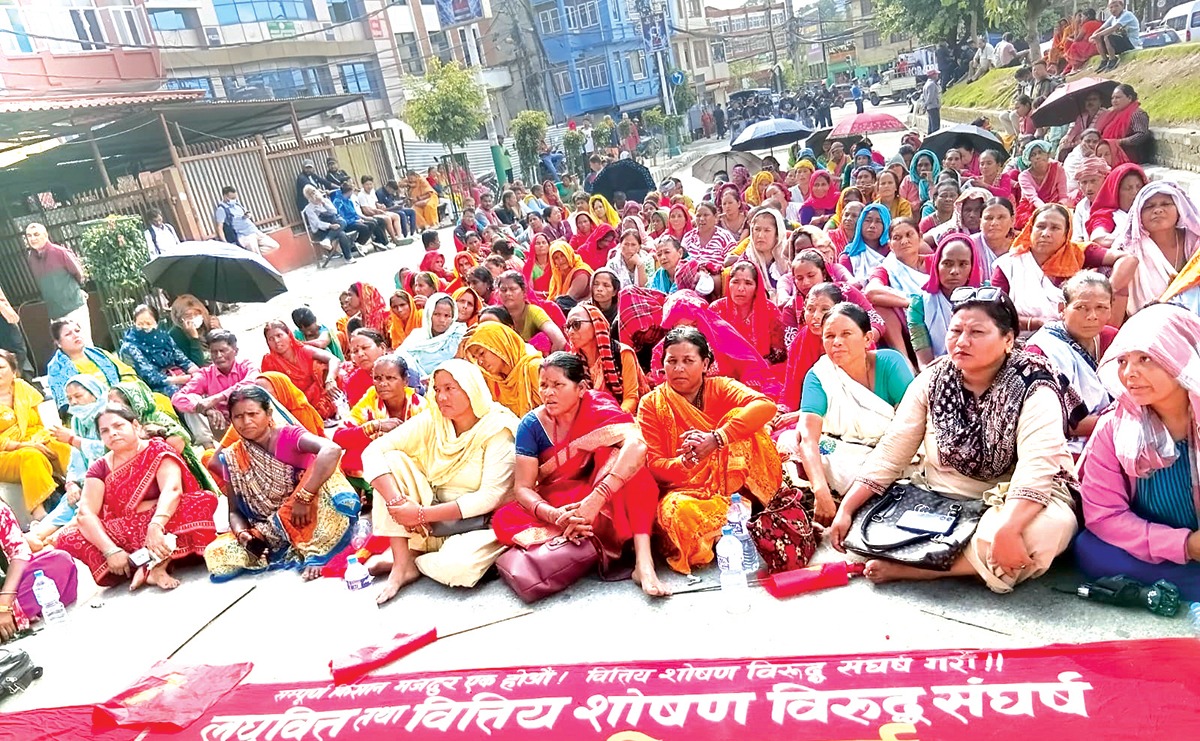
KATHMANDU: Victims of microfinance and financial exploitation have resumed protests in Kathmandu, accusing the government of failing to implement a previously signed six-point agreement.
The movement, which began in 2022, had repeatedly ended in negotiations and agreements, but protesters say the commitments made by the government were never implemented. Dissatisfied with the lack of progress, victims from different districts have once again intensified demonstrations at Maitighar.
The protesters claim they faced excessive interest rates, collective pressure during loan recovery, auction of collateral, blacklisting and other forms of injustice after taking loans from microfinance institutions. What started as district-level protests later became a nationwide movement centered in Kathmandu in 2023.
After continuous sit-ins and rallies at Maitighar Mandala, the government and protesters reached a six-point agreement on March 15, 2024. The agreement included commitments to effectively implement Nepal Rastra Bank directives, facilitate loan restructuring and rescheduling, address the problem of multiple loans, control unfair recovery practices and introduce necessary policy reforms. However, protesters say the agreement was not implemented in practice and that no concrete decisions were taken based on the report of the government-formed task force.
Amid growing dissatisfaction, the movement regained momentum in July 2026. Victims from across the country gathered in Kathmandu demanding full implementation of the six-point agreement, enforcement of the task force report and the introduction of borrower-friendly policies.
As the protests intensified, the government and the Microfinance and Financial Exploitation Struggle Committee signed a second five-point agreement at the Ministry of Finance on July 30.
Under the agreement, the task force’s report submitted on August 6, 2024 will be used as the basis for recommendations, and an implementation action plan will be submitted to the Ministry of Finance within 15 days. The agreement also includes provisions for rehabilitation programs for affected borrowers, a review of blacklisting and collateral auction practices, incorporation of practical alternatives in the report and full implementation of Nepal Rastra Bank’s “Operational Guideline 2024.”
The government also agreed to instruct district administration offices through the Ministry of Home Affairs to stop illegal practices during loan recovery, including mental or physical intimidation, seizure of household goods and harassment for non-payment of installments.
Although the struggle committee announced the suspension of protest programs nationwide after the agreement, another group of protesters has rejected the five-point deal, calling it against the interests of victims, and has continued demonstrations at Maitighar.
Bir Bahadur Tamang of Ratnanagar, Chitwan, alleged that some individuals entered into the agreement out of personal ambition to become leaders and misled innocent women. Another protester, Harimaya Malla, described the agreement as unjust and said she was ready to repay fair loans but would not repay what she called unjust loans. She added that the movement would continue until microfinance institutions are abolished and loans are waived.
Despite the government’s agreement with one faction, the dissatisfied group has continued protests at Maitighar with a separate 14-point charter of demands, insisting that the movement will not stop until all of those demands are addressed.