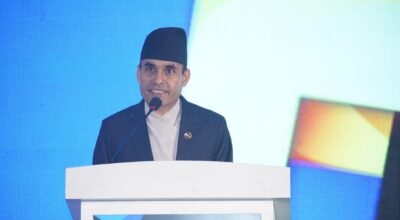


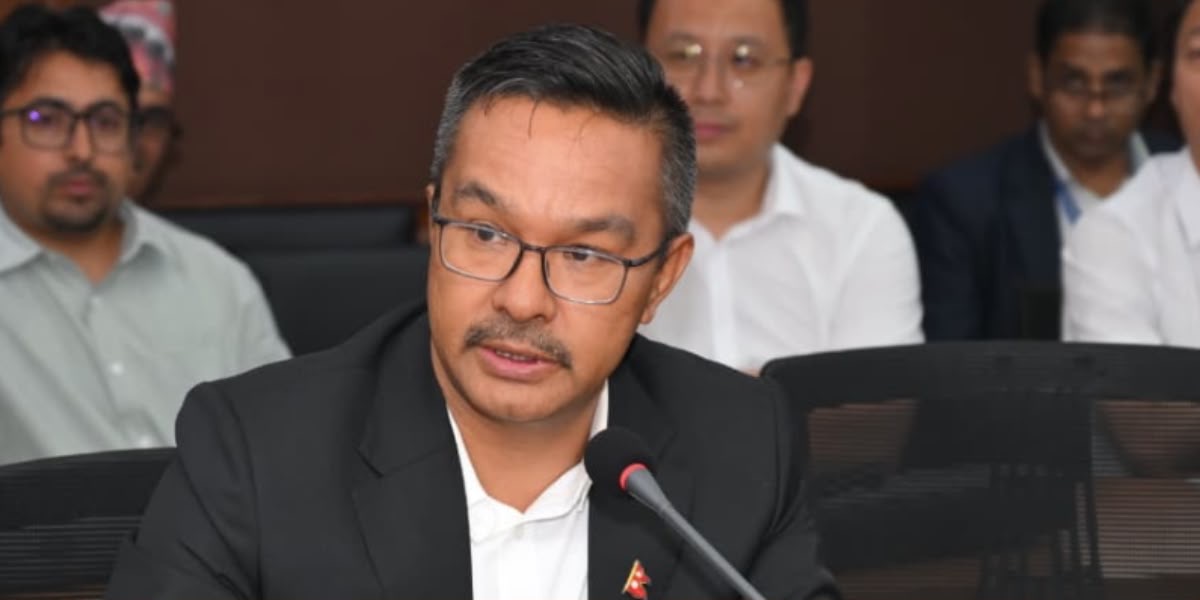
KATHMANDU: Ncell Chief Corporate and Regulatory Officer Dilli Ram Shrestha has urged the government to ensure investor protection, policy stability and equal treatment to attract new domestic and foreign investment into Nepal.
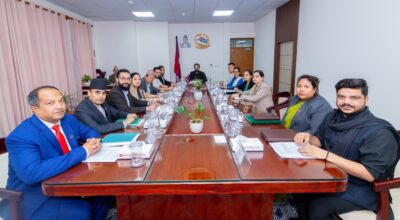
Speaking at a meeting with Finance Minister Dr. Swarnim Wagle on Monday, Shrestha said incidents involving the detention of businesspeople and criminal cases against investors had raised concerns about the security of investments among the private sector and foreign investors.
Shrestha also raised concerns over the controversy surrounding the proposed operation of Ncell by Nepali investors after its acquisition from Axiata, saying such developments could send a negative message to potential investors.
“It should be a matter of pride that a Nepali is operating such a large company,” Shrestha said. “But our investors are being treated as if they are guilty on various issues. This sends a painful message to foreign investors.”
He said Nepal would struggle to attract new investment unless investors felt secure and had confidence in the government’s policies.
Shrestha called for a stable and predictable tax system, saying inconsistent tax assessments by different tax officials should be addressed. He proposed reducing the tax assessment process from up to four years to one year and called for reforms to the Revenue Tribunal.
He also said Section 57 of the Income Tax Act had created uncertainty around mergers and acquisitions involving investments and companies. If the government considers offshore investment illegal, it should make its position clear or introduce a clear legal framework to regulate such investments, he said.
Shrestha also called for reforms to labour laws, particularly the requirement for foreign employees to renew their visas every year. He suggested aligning visa arrangements with employment contracts to make the process more predictable and long-term.
On the telecommunications sector, Shrestha urged the government to ensure equal treatment in foreign currency exchange and payment procedures. He said competing telecom operators could make foreign-currency payments relatively easily, while Ncell was required to obtain recommendations from all three levels of government.
“We have faced problems in making some service payments for the past two years. The Ministry of Communications has to recommend foreign-currency payments,” he said.
Shrestha also raised concerns over what he described as a major disparity in telecom licence fees. He said Ncell was required to pay around Rs20 billion for licence renewal, while another service provider offering similar services could obtain a licence for around Rs300,000.
He urged the government to review the fee structure and ensure a level playing field among telecom operators.
He also alleged unequal treatment in frequency allocation, saying another operator in a similar position had received spectrum while Ncell had not been granted frequency despite being ready to pay the required fees.
Shrestha urged the Finance Ministry to prioritise policy stability, equal treatment, predictable taxation and investor protection to improve Nepal’s investment climate.
Finance Minister Wagle held discussions on Monday with executives of multinational companies operating in Nepal that are among the country’s largest taxpayers.
Representatives of the companies said the government needed to provide greater policy and practical facilitation to enable them to expand their investments in Nepal.