




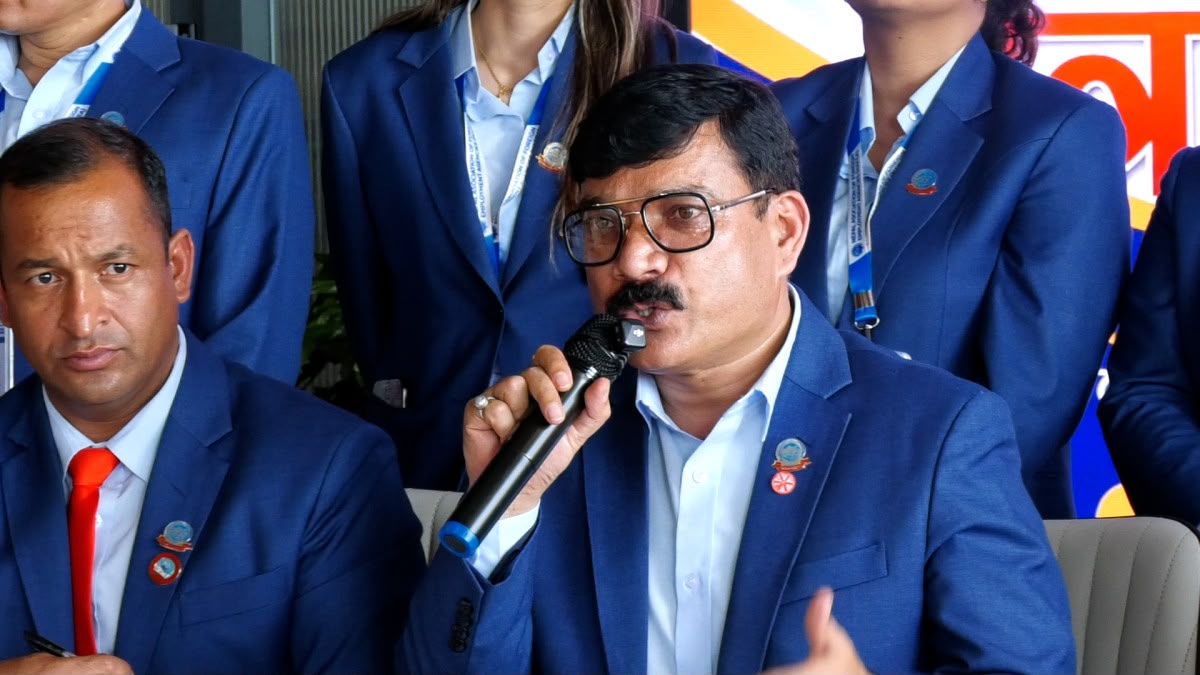
KATHMANDU: The Nepal Association of Foreign Employment Agencies (NAFEA) has announced the suspension of overseas worker deployment, citing longstanding policy hurdles and what it describes as impractical regulations governing Nepal’s foreign employment sector.
At a press conference on Friday, the association said it would treat the current situation as a “zero period” and halt the deployment of migrant workers until the government introduces meaningful policy reforms.
The association argued that despite the foreign employment sector supporting 64% of Nepali households through remittance income and making a significant contribution to foreign exchange reserves and narrowing the country’s trade deficit, the government has failed to address its concerns.
NAFEA President Dik Bahadur Khatri said policy ambiguity has prevented the industry from becoming a dignified and well-regulated sector despite its humanitarian importance.
The association submitted a 15-point charter of demands to the government, including amendments to the Foreign Employment Act, 2007 (2064 BS) to ensure transparent worker costs and establish a scientific service fee structure for recruitment agencies.
Among its key demands is the immediate withdrawal of actions taken against recruitment agencies holding licence numbers 598, 39 and 124, arguing that they were penalized for complying with government decisions made under special circumstances.
The association also called for smoother implementation of overseas employment programs, including access to European labour markets, South Korea’s E-7 visa, Japan’s Specified Skilled Worker (SSW) programme, and a simplified process for certifying employment contracts for female domestic workers.
It further urged the government to curb artificial shortages and price hikes in airfares, fully automate labour approval and contract verification processes, and appoint labour attachés in countries hosting more than 5,000 Nepali workers.
NAFEA also called on the government to use diplomatic channels to end monopolistic practices and the influence of middlemen in worker recruitment for Saudi Arabia, the United Arab Emirates (UAE) and Malaysia. It also proposed suspending the issuance of new recruitment licences, except under clearly defined eligibility criteria.
On financial reforms, the association demanded that interest earned on the cash deposits maintained by recruitment agencies be returned to the businesses. It also urged the government to introduce collateral-free concessional loans for migrant workers to promote a cashless migration system.
Khatri said recruitment agencies would resume sending workers abroad only after the government addresses the sector’s policy concerns and urged the Ministry of Labour, Employment and Social Security to respond to the demands without delay.