



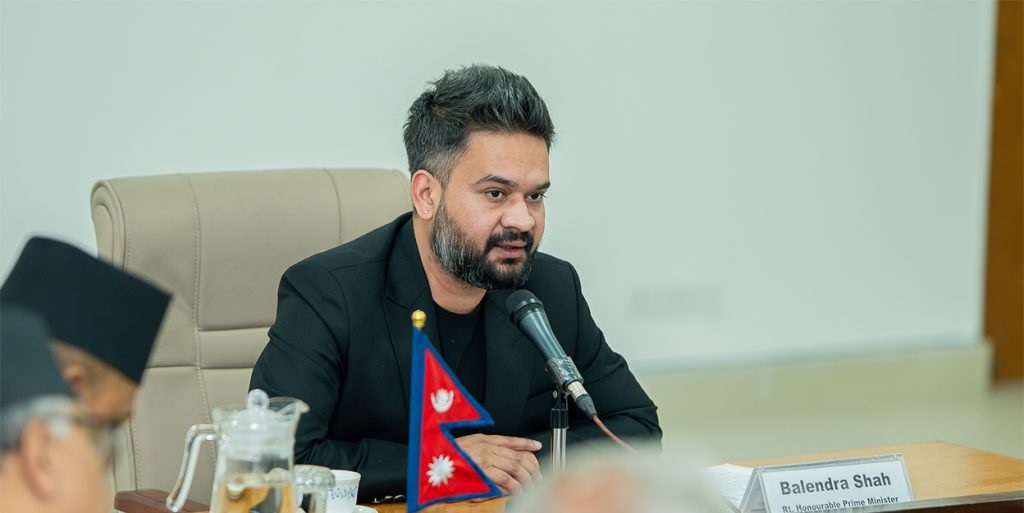
KATHMANDU: Prime Minister Balendra Shah has claimed that long-shuttered and loss-making state-owned industries and institutions are beginning to show signs of improvement, saying the government is prioritising facilitation, motivation and coordination to make them viable and competitive again.
Shah said even industries facing severe challenges could be revived if authorities maintain integrity, remain committed to their responsibilities, enforce the law and prioritise teamwork.
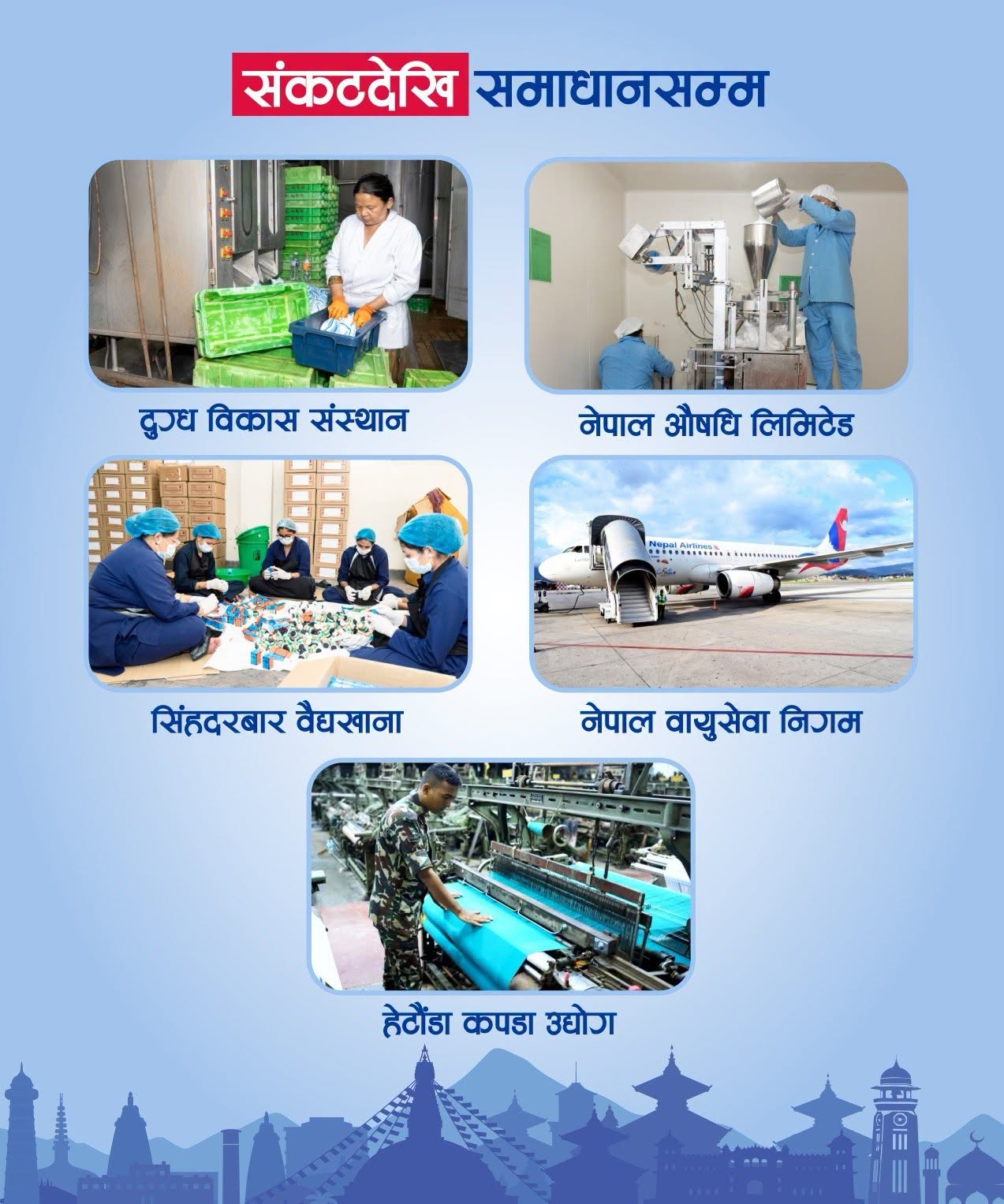
He cited recent developments at Nepal Drugs Limited, Hetauda Textile Industry, Nepal Airlines, Dairy Development Corporation (DDC) and Singha Durbar Vaidyakhana Development Committee as examples of the government’s reform efforts.
Among the achievements highlighted by Shah are:
Nepal Drugs Limited: The company, which had remained loss-making for years, sold medicines worth Rs2.38 crore in the past four months, according to Shah. After obtaining the World Health Organization’s Good Manufacturing Practices (GMP) certification, sales increased and the company recorded a profit of Rs3 crore in the last fiscal year. It has set a target of selling medicines worth Rs30 crore in the current fiscal year. The government has also set a target of producing 98 types of free medicines over the next three years. Of the 37 types targeted for production this year, preparations for 25 are reportedly in their final stage, while 11 types are currently being produced.
Hetauda Textile Industry: The government has assigned the Nepal Army responsibility for test production as part of efforts to reopen the long-shuttered factory. Production has already begun on a limited scale following repairs to the factory’s looms. The government plans to operate the industry after the testing phase.
Nepal Airlines: The national flag carrier generated Rs6.2763 billion in revenue between Chaitra and Ashadh of the last fiscal year, Rs1.1021 billion more than during the same period a year earlier. Seat occupancy rose to 86 percent, up six percentage points year-on-year. During the same period, the airline also paid Rs1.0619 billion in instalments on loans taken from the Employees Provident Fund and Citizen Investment Trust to purchase aircraft.
Dairy Development Corporation: DDC has prioritised clearing farmers’ outstanding payments, reducing its payment cycle from eight months, involving around Rs72 crore, to two to three months, involving around Rs35 crore, Shah said. Farmers have also received an additional Rs1 per litre incentive for milk. Since reform efforts began, daily sales have increased by 35 percent, with average daily revenue rising from Rs6 million to Rs9 million. The corporation has also cut legally questionable milk and ghee benefits previously distributed to all employees, saving nearly Rs3 crore annually. DDC is preparing to export ghee to the Gulf, butter and churpi to China, while cheese production is being resumed at its Nagarkot centre.
Singha Durbar Vaidyakhana: Since the formation of the government, the Ayurvedic medicine producer has manufactured and marketed medicines worth Rs111.6 million, Shah said. Its turnover reached around Rs130 million in the last fiscal year, four times higher than the previous year. The institution is moving towards self-sufficiency in producing 35 types of medicines distributed free of charge. It currently produces 105 types of Ayurvedic medicines and has set a target of producing 150 types in the current fiscal year. It also aims to obtain GMP certification for powder and tablet production and establish a processing centre for medicinal herbs and raw materials.
Shah said the progress demonstrated that troubled state-owned industries could be revived with integrity, commitment and dedication to the country.
He called for continued public support and cooperation in the government’s effort to increase domestic production and move Nepal towards greater economic self-reliance.