




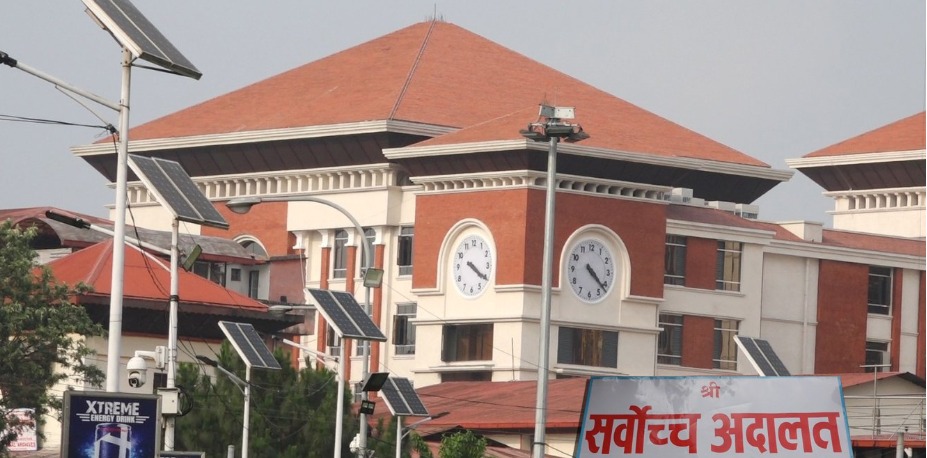
KATHMANDU: The Supreme Court of Nepal has issued a directive order instructing the government to protect citizens’ property rights during development and infrastructure projects and to undertake comprehensive reforms of the existing legal framework governing land acquisition. A joint bench of Justices Hariprasad Phuyal and Meghraj Pokharel issued the order in a verdict delivered on July 13, 2026 (Asar 29, 2083 BS). The full text of the judgment was made public on Tuesday.
The court held that the current Land Acquisition Act, 1977 (2034 BS) has become outdated and fails to reflect Nepal’s federal structure or adequately guarantee citizens’ constitutional right to fair compensation.
The Supreme Court issued a six-point directive to the government and instructed it to draft a new, modern, and time-relevant land acquisition law.
In its ruling, the court stated that while infrastructure development is essential for national progress, it cannot come at the expense of citizens’ property rights. Under the directive, the government must establish objective criteria clearly defining which level of government has the authority and responsibility for road projects and other development works.
The court further ordered the government to ensure that the entire land acquisition process is conducted in a manner that promotes cooperation, coordination, and coexistence among the federal, provincial, and local governments in line with Nepal’s federal system.
The judgment also emphasized that affected landowners and local communities must be guaranteed meaningful participation in the acquisition process, including adequate opportunities for public hearings.
For families displaced by development projects, the Supreme Court directed the government to introduce an objective system for determining proper and sufficient compensation and to ensure rehabilitation and resettlement measures that restore their previous social and economic conditions.
In addition, the court instructed the government to set clear timelines for completing land acquisition procedures and to establish a separate mechanism or tribunal for the speedy resolution of disputes related to compensation or rehabilitation, with provisions for appeals.
The case arose from a writ petition filed by Chopindra Bahadur Tamang of Champadevi Rural Municipality-3 in Okhaldhunga district. Tamang alleged that a road had been excavated through the middle of his residential and agricultural land in violation of the law and the approved design map.
After examining the evidence, the Supreme Court concluded that the road had been constructed on the petitioner’s private land without his consent and without completing the required legal procedures.
The court stressed that a balance must be maintained between an individual’s right to property and the state’s power of eminent domain. It also strongly criticized the practice of taking private property in the name of development without consent or compensation.
However, considering that the road had already been completed and was being used by the public, the court said providing fair compensation and damages to the landowner would be more reasonable and just than demolishing the road.
The Supreme Court ultimately issued a mandamus order directing the Harkapur Road Division Office, Champadevi Rural Municipality, and other concerned authorities to determine compensation and damages for the disputed land and complete the acquisition process through negotiation or mutual agreement in accordance with the law