

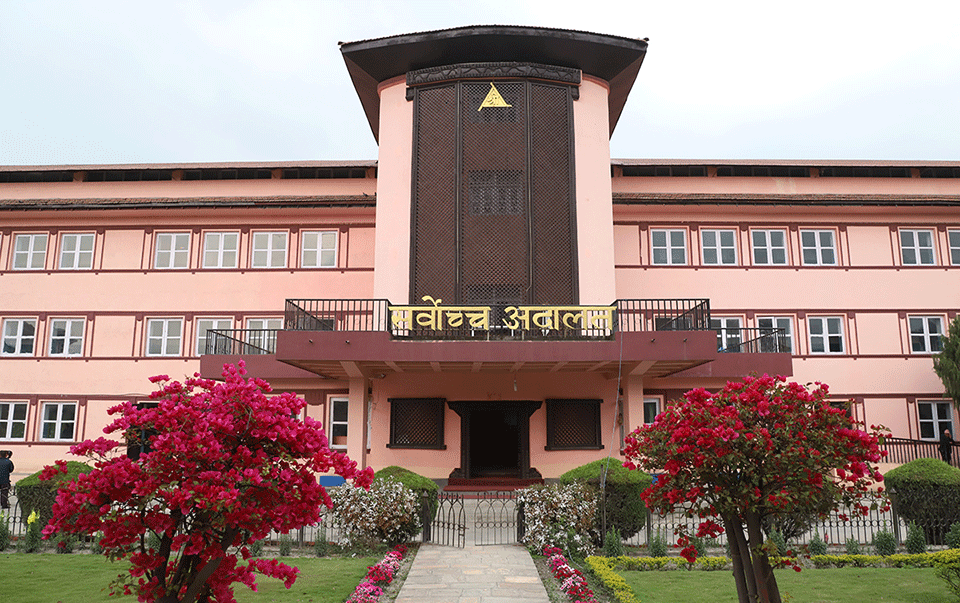
KATHMANDU: The Supreme Court has ordered former prime ministers Madhav Kumar Nepal and Dr Baburam Bhattarai, along with the Special Court and the Office of the Attorney General, to submit written responses in the Lalita Niwas government land embezzlement case.
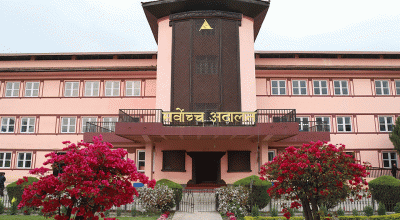
A full bench of the Supreme Court issued the order on Thursday while hearing a writ petition filed seven years ago by senior advocate Balkrishna Neupane. The bench comprising Chief Justice Dr Manoj Kumar Sharma and Justices Binod Sharma and Sunil Kumar Pokhrel sought written responses from the defendants, according to the Supreme Court.
Neupane said the court had previously sought an explanation only from the Commission for Investigation of Abuse of Authority (CIAA) over why the two former prime ministers were not made defendants in the case.
The latest order has expanded the process by making former prime ministers Nepal and Bhattarai, the Special Court and the Office of the Attorney General respondents and seeking written explanations on why criminal proceedings should not be initiated against the two former prime ministers.
Three cases related to the Lalita Niwas land case had been pending before the Supreme Court. As legal proceedings in two of them had already been completed, the court decided to club them with the main case through an “other order.” The latest directive to seek written responses was issued in the principal case.
On January 22, 2020, the CIAA filed a case at the Special Court against 175 individuals accused of involvement in the Lalita Niwas land scam. However, Nepal and Bhattarai, who were prime ministers when key Cabinet decisions related to the transfer of the land were made, were not named as defendants.
Neupane filed his writ petition at the Supreme Court on January 29, 2020, arguing that the two former prime ministers had been given undue exemption despite their role in policy-level decisions concerning the registration of government-owned Lalita Niwas land in private names.
Seven years after the writ was filed, the case has yet to reach a final conclusion.
Neupane has argued that the former prime ministers made policy decisions that facilitated the transfer of government land into private ownership and that the CIAA’s selective decision to exempt certain individuals from prosecution was unlawful.