

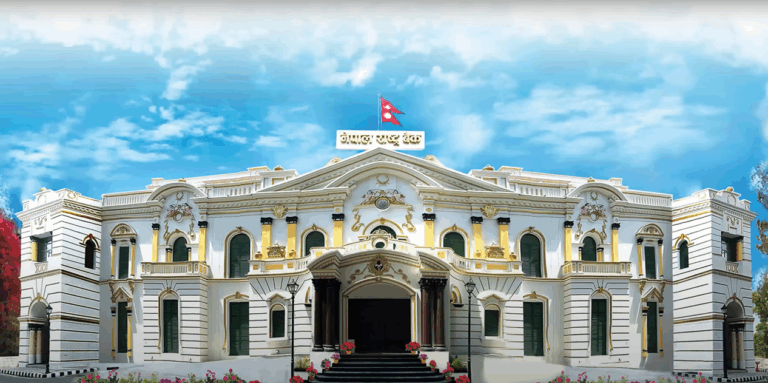
KATHMANDU: Chief executive officers of commercial banks could now be eligible to become governor of Nepal Rastra Bank under a proposed amendment to the Nepal Rastra Bank Act, 2002.
The Federal Parliament’s Finance Committee has agreed to expand the eligibility criteria for the central bank governor, opening the door for experienced executives from the commercial banking sector.
The committee’s agreement allows candidates with postgraduate degrees in economics, monetary economics, banking, finance, statistics, public administration, commerce, management, commercial law or accounting, along with the required professional experience, to qualify for the governor or board member positions.
The proposed criteria also recognize at least four years of executive-level experience in commercial banks or international economic and financial institutions. Government secretaries at special-class level, NRB executive directors and university professors would also qualify.
However, former commercial bank CEOs would face a two-year cooling-off period to prevent conflicts of interest. A former CEO would have to wait at least two years after leaving or retiring from the position before becoming eligible for governor or NRB board membership.
The committee has also proposed tighter restrictions on share ownership. The existing threshold of 5 percent would be reduced to 0.5 percent. Anyone holding more than 0.5 percent shares in a bank or financial institution would be barred from becoming governor, deputy governor or an NRB board member.
The proposed changes aim to balance broader access to banking expertise with stronger safeguards against conflicts of interest.
The move could also expand the pool of potential candidates for future NRB governor appointments, particularly by allowing experienced commercial banking executives to compete for the central bank’s top position after meeting the cooling-off and shareholding requirements.