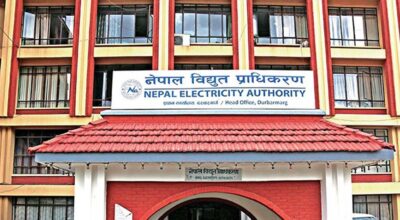


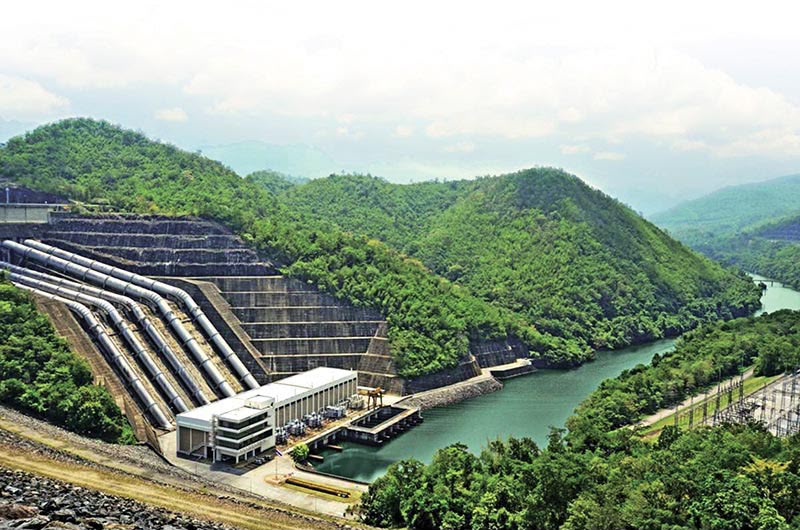
KATHMANDU: The Nepal Electricity Authority (NEA) has begun extending the Required Commercial Operation Date (RCOD) for 218 hydropower projects that have signed Power Purchase Agreements (PPAs) but have been unable to begin commercial electricity generation within the stipulated timeframe due to various reasons.
For the first time, the state-owned utility has adopted a formal policy to classify projects into four categories based on their construction progress, compliance with PPA obligations and RCOD status before deciding whether they qualify for an extension.
The decision was approved by the NEA Board of Directors at its meeting on July 16, which endorsed the new classification framework. Under the policy, the authority has started processing RCOD extensions for projects falling under Groups A and B.
Speaking during a meeting with hydropower developers on Wednesday, Minister for Energy, Water Resources and Irrigation Biraj Bhakta Shrestha said the government’s objective is not to penalize private developers but to facilitate the completion of projects facing genuine implementation challenges. He stressed that RCOD extensions would be granted through an institutional and transparent mechanism rather than on the basis of individual discretion.
The minister said the government remains committed to protecting private-sector investment and investor confidence while expecting developers to fulfill their contractual responsibilities on time. He added that sustained growth in Nepal’s energy sector would require mutual accountability between the government and private investors.
According to the NEA, 320 hydropower projects with a combined installed capacity of 8,292 megawatts are currently under construction. Of these, 150 projects with a total capacity of 4,491 MW have been placed in Group A, while 68 projects with a combined capacity of 1,420 MW fall under Group B. The remaining projects have been classified under Groups C and D.
During the discussion, Independent Power Producers’ Association, Nepal (IPPAN) Senior Vice-President Uttam Blon argued that all projects should receive a final RCOD extension under specified conditions in line with the principle of natural justice. He proposed allowing developers one year to complete their PPAs and an additional six months to begin construction, ensuring equal treatment for all projects.
Under the NEA’s newly adopted criteria, Group A includes projects whose RCOD has not yet expired and which have fulfilled key obligations under their PPAs, such as obtaining generation licences, achieving financial closure and completing land acquisition, or are still within the contractual period to meet those requirements.
Group B comprises projects whose RCOD has expired but which were unable to begin commercial operation because of delays in the construction of transmission lines or substations by the NEA. It also includes projects affected by force majeure or other circumstances beyond the developers’ control that have received approval for an RCOD extension, as well as projects that had achieved at least 25 percent physical progress before their RCOD expired.
Projects in Group C are those that have not yet reached their RCOD but have failed to meet essential obligations such as securing generation licences, financial closure or land acquisition, or have achieved less than 25 percent physical progress. Group D includes projects whose RCOD has already expired and which still have not fulfilled mandatory contractual obligations, as well as projects whose survey or generation licences have been revoked.
The NEA said physical progress will be assessed under its 2014 Project Progress Assessment Guidelines, which recognize substantial construction of key components such as headworks, tunnels, pipelines and powerhouses. For solar projects, progress will be measured through indicators including solar panel procurement agreements, opening of letters of credit, completion of land acquisition and commencement of mounting structure and foundation works.
Projects classified under Group B will remain under regular monitoring by the NEA’s Power Trade Department, which will issue directives to ensure timely completion. Their progress will be reviewed continuously, and the authority may reclassify projects within six months if warranted.
Meanwhile, projects placed in Group C will receive a Notice of Default under the terms of their PPAs. If developers fail to provide a satisfactory response or make adequate progress after receiving the notice, the NEA said it will initiate the process of terminating their power purchase agreements.