

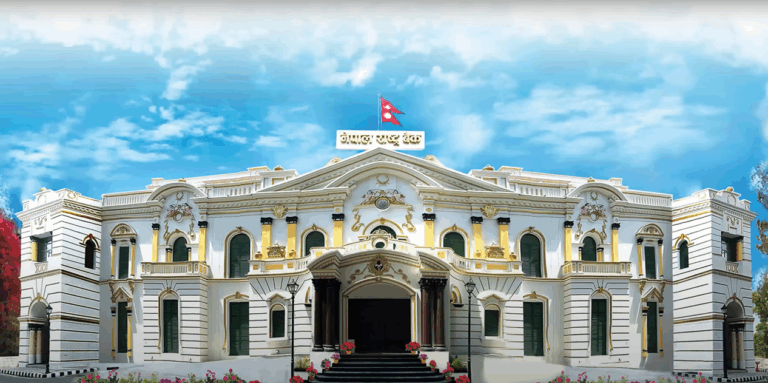
KATHMANDU: Nepal’s economy is showing a dual character, with a robust external sector supported by remittances and foreign exchange reserves, while the domestic economy struggles with sluggish growth and inflationary pressure, according to the Nepal Rastra Bank’s report for the first month of fiscal year 2083/84.
Remittance inflows rose by 21.2 percent to Rs 215.05 billion in Shrawan. This contributed to a current account surplus of Rs 94.59 billion and a balance of payments surplus of Rs 90.34 billion. Total foreign exchange reserves reached Rs 3,946.23 billion, sufficient to cover 18.8 months of imports.
In foreign trade, exports increased by 61.7 percent to Rs 38.70 billion, while imports rose by 31.0 percent to Rs 187.44 billion. Due to the high volume of imports, the trade deficit widened by 24.9 percent to Rs 148.74 billion. Much of the export growth is attributed to re-exported goods like processed oils, indicating that domestic production-based exports remain weak.
Consumer inflation reached 5.96 percent. Rising costs in food and beverages at 6.77 percent and transportation at 13.17 percent have directly impacted the purchasing power of the public. Government revenue collection for the month stood at Rs 92.23 billion, while total expenditure was Rs 41.89 billion. Capital expenditure, a key indicator of development activity, remained limited to Rs 1.33 billion.
Financial sector data shows deposits decreased by 0.3 percent, while credit to the private sector grew by only 0.4 percent. The average deposit interest rate for commercial banks is 3.15 percent, with an average lending rate of 6.48 percent. The report highlights that while the country is shielded from immediate financial crises due to strong external indicators, the lack of domestic investment and low capital expenditure remain significant challenges for the economy.