

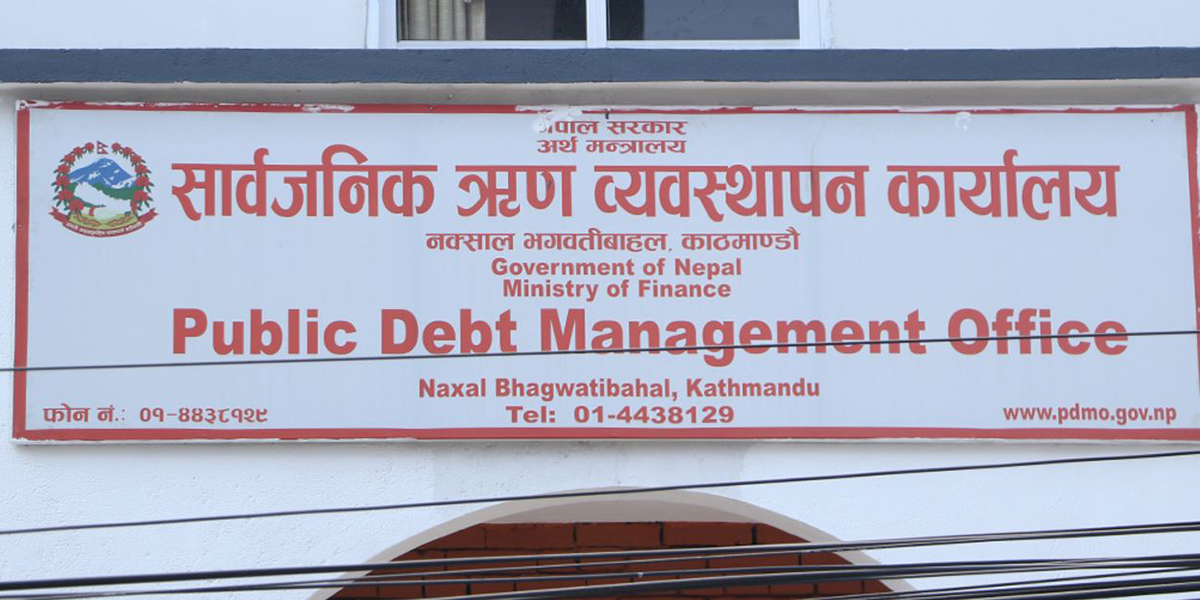
KATHMANDU: Nepal’s total public debt climbed to Rs 29.74 trillion by the end of fiscal year 2025/26 (2082/83 BS), highlighting a sharp increase despite Finance Minister Swarnim Waglé’s previous criticism of the country’s growing debt burden before assuming office.
According to the latest figures, Nepal’s outstanding public debt reached Rs 29.74 trillion, up from Rs 26. 74 trillion a year earlier- an increase of roughly Rs 3.9 trillion in just one fiscal year. The Public Debt Management Office (PDMO) attributed the rise to continued government borrowing and the depreciation of the Nepali rupee against major foreign currencies.
The country’s public debt now stands at 45.07 percent of Gross Domestic Product (GDP). Of the total debt, Rs 15. 99 trillion (53.77 percent) is external debt, while Rs 13.75 trillion consists of domestic borrowings.
The government had targeted mobilizing Rs 595.66 billion in public debt during the fiscal year but managed to raise only Rs 447.17 billion. Domestic borrowing largely met expectations, with Rs 358.67 billion raised against a target of Rs 362 billion. External borrowing, however, fell significantly short. Against a target of Rs 233.66 billion, the government secured only Rs 88.5 billion, achieving just 37.88 percent of its goal.
Debt servicing also remained a major fiscal burden. The government allocated Rs 411.01 billion for principal and interest payments during the fiscal year. By mid-July, it had spent Rs 386.23 billion, equivalent to 93.97 percent of the allocated budget.
The report also highlights the growing impact of exchange-rate fluctuations on Nepal’s debt obligations. As the US dollar and other major foreign currencies appreciated against the Nepali rupee, the rupee value of Nepal’s external debt automatically increased. According to the report, exchange-rate movements alone added an estimated 6.24 percent to the country’s public debt liability during the fiscal year.
Despite the growing burden of foreign-currency-denominated debt, the government has not initiated any policy measures to strengthen the Nepali rupee or review its long-standing currency peg with the Indian rupee, leaving Nepal increasingly exposed to exchange-rate risks.