

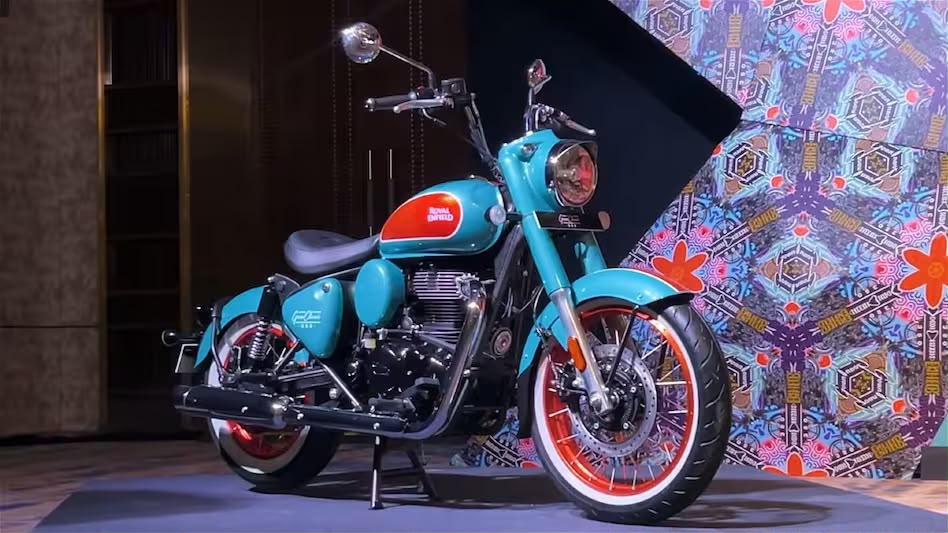
KATHMANDU: TG Auto Group Pvt. Ltd. (TGPL), the automotive arm of Nepal’s Triveni Group and the country’s sole authorized assembler and supplier of Royal Enfield motorcycles, generated more than Rs 4 billion in revenue during the first nine months of fiscal year 2025/26, exceeding its earnings for the entire previous fiscal year.
According to the company’s latest financial disclosures, TGPL recorded revenue of over Rs 4 billion in the nine months ending mid-April, compared with Rs 3.74 billion earned during the whole of FY 2024/25. The company attributed the strong growth to higher motorcycle sales volumes and improved average selling prices.
The company’s profitability also improved significantly during the review period. With lower production costs, its operating profit margin increased to 8.48 percent, up from 6.57 percent a year earlier. Cash reserves also strengthened, rising from Rs 197 million to Rs 267 million.
TGPL has maintained rapid business growth since commencing operations. Revenue increased from Rs 189 million in FY 2022/23 to Rs 2.97 billion in FY 2023/24 before crossing Rs 4 billion in the first nine months of the current fiscal year.
Established in May 2022, TGPL is Nepal’s exclusive authorized assembler and supplier of Royal Enfield motorcycles. The company operates a modern motorcycle assembly facility spanning nearly 100,000 square feet in Bara district, with an annual production capacity of 20,000 motorcycles. Commercial production began in May 2023, while its corporate headquarters are located in Kathmandu.
The company is chaired by Birendra Kumar Sanghai, a veteran entrepreneur with extensive experience in Nepal’s manufacturing, trading and service sectors. Sanghai is also a promoter of NIC Asia Bank and SuryaJyoti Life Insurance and serves as Managing Director of Annapurna Vegetable Products Pvt. Ltd.
TGPL assembles Royal Enfield motorcycles in Nepal using completely knocked-down (CKD) kits imported from Eicher Motors India. The company said government incentives for domestic assembly operations-including a 50 percent excise duty concession and a 25 percent customs duty reduction compared with fully built imported motorcycles -have lowered production costs and enabled competitive pricing in the Nepali market.
Royal Enfield motorcycles assembled by TGPL are marketed nationwide through the brand’s official distributor, Alpha Automotive Pvt. Ltd. Most sales within the Kathmandu Valley are conducted on a cash basis, while dealers outside the valley receive credit terms of up to one month.
The company’s working capital management also improved during the review period. Its average receivable collection period stood at four days, inventory holding period at 25 days, and supplier payment period at six days. As a result, the net operating cycle declined from 26 days to 22 days, indicating improved operational efficiency.
TGPL said Royal Enfield has established a strong customer base in Nepal’s premium motorcycle segment, particularly in the 350cc-and-above category. The company expects continued business expansion, supported by steady demand and strong brand recognition.
However, it identified rising competition as a key business risk. The growing adoption of electric motorcycles and the establishment of additional motorcycle assembly plants in Nepal are expected to intensify market competition. Nevertheless, TGPL noted that most competing brands remain focused on motorcycles below 250cc, allowing Royal Enfield to retain a competitive advantage in the premium segment.
The company also highlighted policy uncertainty as a potential challenge. Since motorcycles are classified as luxury goods in Nepal, they are subject to relatively high customs duties, excise taxes and value-added tax (VAT). While domestic assembly industries currently benefit from tax concessions, any future changes in government policy could directly affect the company’s cost structure and profitability.
In addition, TGPL said regulatory changes by the Nepal Rastra Bank-including revisions to vehicle loan limits, import letter of credit (LC) margin requirements and risk-weighting policies for vehicle financing-could influence motorcycle demand and business performance.
To support its expansion, the company has increased its borrowings from banks and financial institutions to Rs 1 billion, up from Rs 700 million previously.