

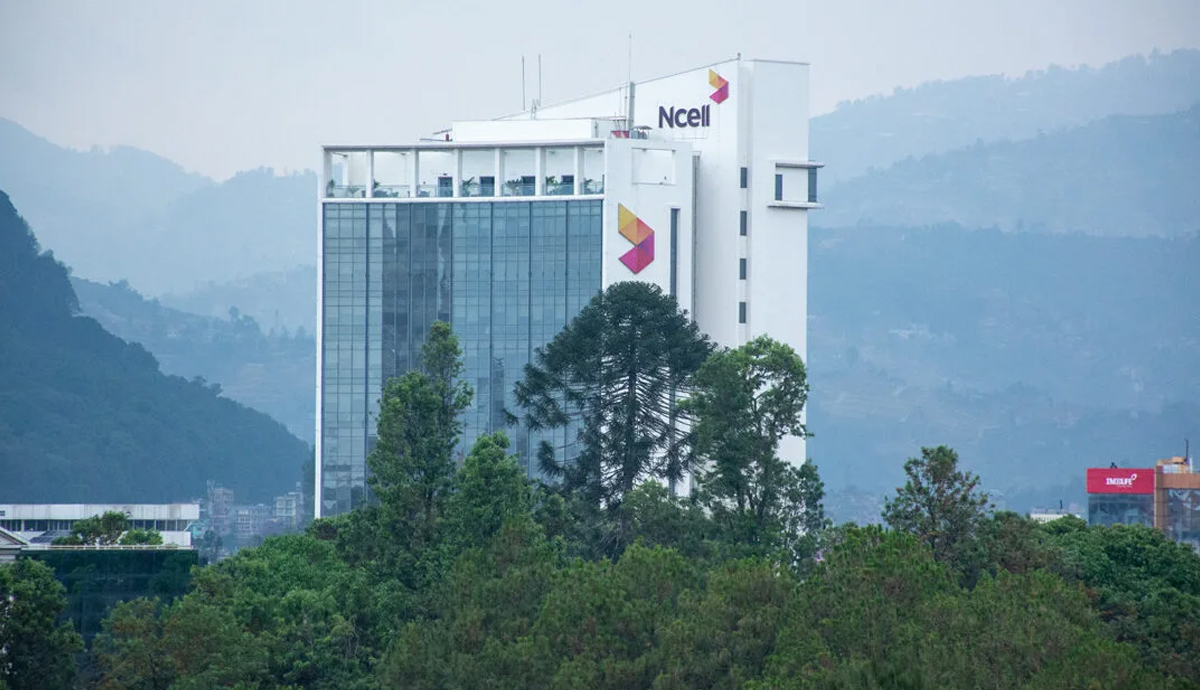
KATHMANDU: Nepal’s nearly three-year legal dispute over the ownership transfer of private telecom operator Ncell has moved closer to resolution after the Supreme Court dismissed a petition seeking to invalidate the company’s 80% share sale, paving the way for the matter to be settled through the country’s regulatory process.
A joint bench of Justices Sapana Pradhan Malla and Tek Prasad Dhungana rejected the writ petition filed by Amaresh Kumar Singh, ruling that there were no legal grounds for the court to annul the share purchase agreement or issue an order preventing its recognition.
The court held that the validity of the share transaction should not be determined through a writ petition and that there was no justification for judicial intervention to invalidate the deal.
The ruling effectively shifts the ownership issue from the courts to Nepal’s telecommunications regulator. The Nepal Telecommunications Authority (NTA) is now expected to examine the transaction and make a decision in accordance with the Telecommunications Act, relevant regulations, and licensing provisions.
The petition had challenged the December 1, 2023 agreement under which Axiata Investments (UK) transferred its 80% stake in Ncell to Spectrlite UK, seeking to have the transaction declared invalid. However, the Supreme Court concluded that because the regulator is already empowered to exercise its statutory authority, there was no need for the court to issue extraordinary judicial orders.
The judgment establishes that disputes relating to Ncell’s ownership should be resolved through the legal and regulatory framework rather than through judicial cancellation of the share transfer.
Although the court dismissed the petition, it also emphasized the need for clearer and more effective regulation of share transactions involving foreign-invested telecommunications companies. Exercising its constitutional authority under Article 133(3), the court issued directive orders to the relevant authorities.
The Supreme Court reaffirmed that any share transaction involving licensed telecommunications companies must comply with Nepal’s telecommunications laws, regulations, the NTA’s 2019 Share Purchase and Sale Regulations, and the conditions of the company’s operating licence.
The court also instructed Ncell to continue operating transparently and in full compliance with all applicable legal and regulatory requirements.
In addition, the judgment reminded the Nepal Telecommunications Authority to fully exercise its statutory powers, including issuing directives, making licensing decisions, and imposing penalties where licence conditions or legal provisions are violated.
The decision is expected to bring long-awaited clarity to one of Nepal’s most closely watched corporate and foreign investment disputes. While the court has ruled out invalidating the share transaction, the remaining issues surrounding the ownership transfer will now be addressed through the regulatory process.
The order is also seen as sending a broader message about the governance of Nepal’s telecommunications sector, reinforcing the regulator’s responsibility to ensure effective oversight of all licensed service providers.
Ncell’s ownership uncertainty has weighed on investor confidence and the company’s long-term business planning for several years. With the judicial challenge now dismissed, industry observers believe the regulatory process could finally provide certainty over the company’s ownership structure.
A timely and transparent decision by the Nepal Telecommunications Authority is expected not only to resolve Ncell’s ownership issue but also to strengthen confidence in Nepal’s telecommunications industry and its investment climate.