


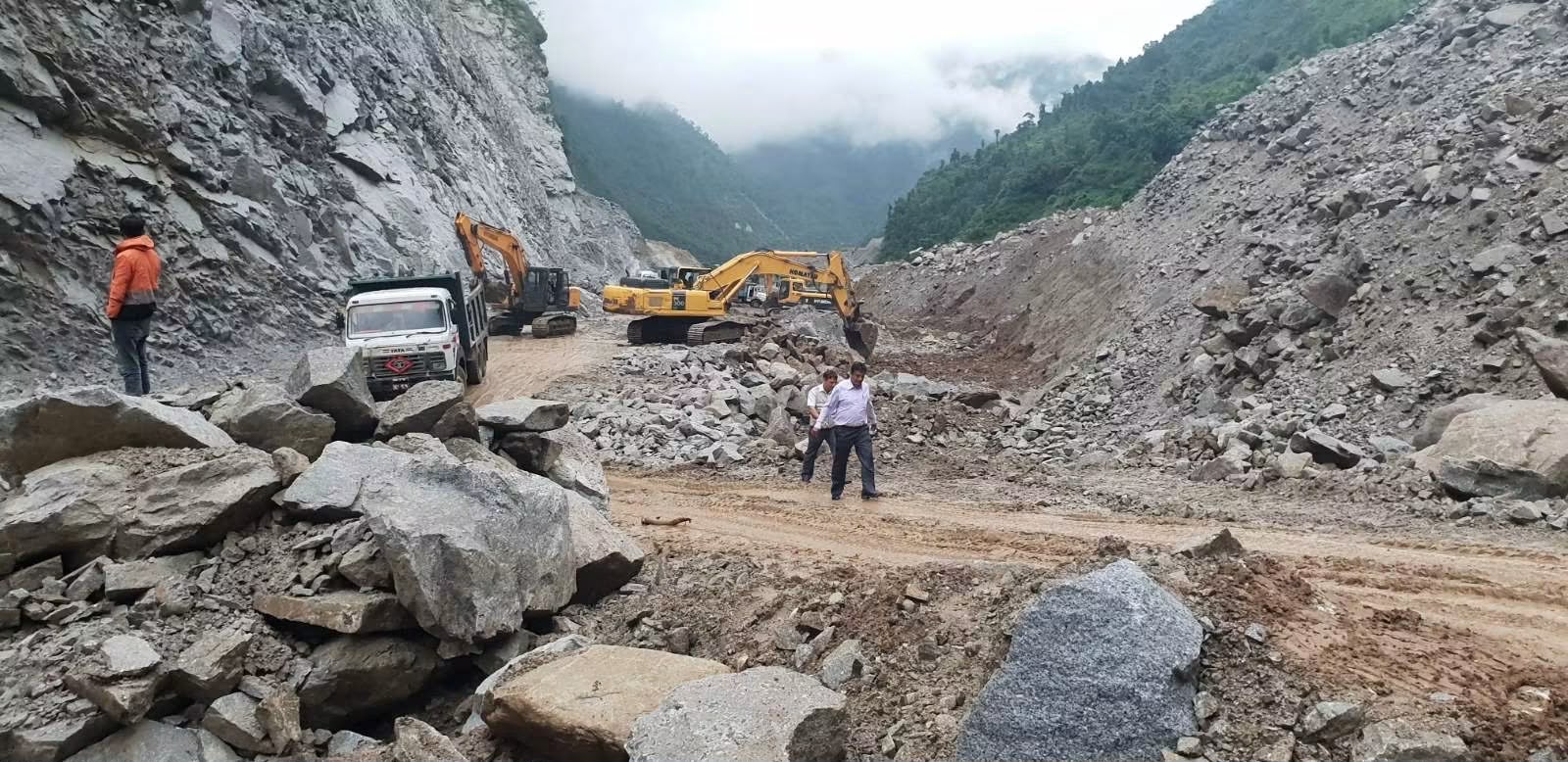
KATHMANDU: Up to 700 construction contracts across Nepal are at risk of cancellation as the country’s construction sector faces mounting financial and operational pressures, according to the Federation of Contractors’ Associations of Nepal.
The federation said around 900 projects are currently classified as distressed, with more than 250 contracts already cancelled. It warned that another 500 to 700 contracts could face cancellation in the coming period, posing a significant risk to infrastructure development.
Shivahari Ghimire, general secretary of the federation, said contractors are struggling to remain operational because project costs have risen sharply while payments continue to be based on outdated rates.
He said the crisis cannot be attributed solely to contractors. Delays in handing over construction sites, unresolved land acquisition and forest-related issues, and the government’s practice of awarding contracts without ensuring adequate budget allocation have also left projects stalled.
The sector is also facing a severe shortage of skilled workers. Ghimire said more than 80% of skilled labourers now have to be brought from India and Bangladesh, as workers have become reluctant to work for contractors because of payment uncertainty.
Contractors have also raised concerns over the widening gap between market prices and government cost estimates for materials such as bitumen. Government-set rates for bridge construction in the Tarai and hill regions are often significantly below actual construction costs, making some projects unattractive to bidders and increasing the risk of collusion.
Ghimire said Nepal should consider adopting an average-bid system similar to India’s. Although the system could create some uncertainty during contract awards, he said it would make it easier for contractors to complete projects after securing them at more realistic prices.
Former federation president Ravi Singh said excessively low bidding has become one of the main causes of distressed projects. Contractors, he said, often submit bids far below realistic costs simply to survive, later attempting to cover losses from one project through another.
This practice has affected both project quality and completion timelines, he said. Poor designs and drawings, difficult geography and climate-related changes have also contributed to project failures. In some cases, changes in river levels have made older designs ineffective, leaving projects stranded.
Contractors have urged the government to provide a one-time exit mechanism for projects affected after the COVID-19 period. Singh proposed confiscating performance guarantees while avoiding blacklisting contractors, allowing capable firms to continue operating.
He warned that strict implementation of Section 59(8) of the Public Procurement Act could push a large number of construction companies out of business. A transitional approach, he said, should be adopted for contracts affected by previous legal and regulatory changes.
The construction sector has welcomed the average-bid provision introduced through the second amendment to the Public Procurement Act, passed by Parliament on June 25. The Public Procurement Monitoring Office has also prepared standard bidding documents, paving the way for new tenders under the revised system.
Contractors believe average bidding could reduce unrealistic low-price competition and give financially capable companies a better opportunity to undertake projects at sustainable rates. However, uncertainty remains over the calculation method and implementation procedures.
The government’s decision to limit a construction company to a maximum of five contracts at a time has also received support from contractors. Singh said the measure could help distribute projects more evenly and improve contractors’ ability to complete work within schedule.
Construction activity is currently subdued across the country due to the monsoon. Contractors, however, say the government needs to address payment delays, realistic project costing, site-clearance problems and legal barriers to prevent the current pipeline of distressed projects from turning into a broader infrastructure crisis.