

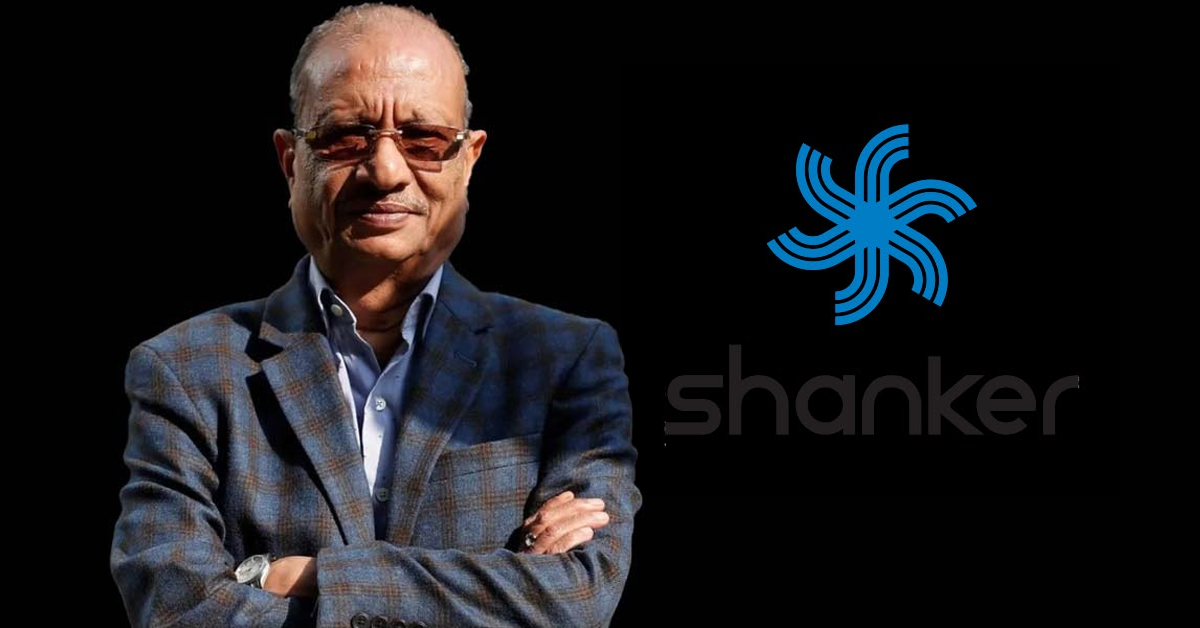
KATHMANDU: In the high-altitude political theater of Kathmandu, the machinery of state has turned its formidable gaze upon the engine room of the national economy. The re-arrest and legal entanglement of Shanker Lal Agrawal-chairman of the Shankar Group and patriarch of one of modern Nepal’s most formidable industrial dynasties-is far more than a routine high-profile legal dispute. It is a watershed moment that lays bare the uneasy, often volatile friction between a muscular state apparatus and the private capital required to sustain a fragile nation.
To understand the tremors currently rattling Nepal’s corporate suites, one must look beyond the immediate police files and examine the sprawling industrial empire Agrawal built. The history of the Shankar Group is, in many ways, the biography of modern Nepali enterprise itself. Its roots trace back to 1935, long before the nation possessed a formal banking system, coherent industrial policies, or predictable foreign investment frameworks, when Rawat Mal Golyan laid down the family’s merchant foundation.
Decades later, in 1979, Shanker Lal Agrawal formalized that vision, steering the enterprise through the brutal crosswinds of political instability, violent conflict, chronic load-shedding, and acute supply shortages.
While others sought safety by funneling wealth abroad, the Shankar Group rooted its ambitions deeply at home. When Jagdamba Steel was launched in 1984 on the Bara border, skeptics dismissed it as a flop. Yet, through resilience and calculated expansion, it became the cornerstone of domestic infrastructure. Today, the group commands roughly 55% of the Nepali steel market, producing over 2.5 million metric tons annually and single-handedly altering a trade deficit plagued by heavy foreign exchange expenditures.
The architecture of an industrial titan
The corporate footprint of the Shankar Group has evolved into a masterclass of vertical integration and economic endurance, encompassing more than 40 operating companies across 14 distinct business sectors. At its core lies the steel and heavy industry division, anchored by Jagdamba Steels as the first company to manufacture structural steel in Nepal, offering an integrated facility that produces high-ductile rebar like ‘Rhino 500D’ tailored specifically for earthquake-resistant construction. Around this industrial anchor, the group expanded into cement and infrastructure through major joint ventures like Shaurya Cement and Riddhi Siddhi Cement, feeding the nation’s growing construction and real estate demands. Diversification continued seamlessly into automotive retail and mobility via Jagdamba Motors representing global market leaders, financial services through strategic stakes in Himalayan Re-Insurance and Union Life Insurance, and clean energy assets including Modikhola Hydropower and Balefi Hydropower. Venturing further into high-end hospitality with the luxury DoubleTree by Hilton in Kathmandu, alongside extensive FMCG and polymer networks, the group’s operations span Nepal, India, and neighboring South Asian markets. This vast conglomerate generated revenues exceeding USD 1 billion-representing roughly 6% of Nepal’s entire national budget. More critically, it employs upwards of 20,000 people directly, providing vital livelihoods in inner Terai industrial hubs like Simara, Jitpur, Lumbini, Bhairahawa, and Parwanipur, where alternative employment options are sparse and the pull of foreign migration remains a constant socio-economic bleeding wound.
The collision of state and enterprise
Despite an economic footprint that dwarfs that of many state institutions, the group historically maintained a low political profile, shunning the traditional corridors of patronage and power in favor of pure production. That strategic detachment has now left it uniquely exposed.
Following the rise of a strong government promising rigorous governance and a structural leap toward a $100 billion economy, the state’s enforcement arms-ranging from the Central Investigation Bureau (CIB) to the Department of Money Laundering Investigation (DMLI)-have unleashed a wave of aggressive, high-profile interventions. For a business community that expected a predictable, investment-friendly climate under a commanding parliamentary majority, these raid-style detentions, frozen bank accounts, and pre-conviction public trials feel less like justice and more like a targeted crackdown.
The reaction from Nepal’s premier business federations has been swift and severe. The private sector does not argue for impunity; it champions accountability. But the prevailing sentiment is one of deep betrayal: a chasm between the reformist rhetoric voiced by political leaders and the heavy-handed, punitive reality meted out by police mechanisms. When foundational credit facilities-encompassing over Rs 105 billion across various group entities—are thrown into regulatory turbulence and prominent executives are jailed before guilt is formally established, the psychological contract between the state and the wealth-creators fractures entirely.
A precarious crossroads
Nepal remains an economy walking a precarious tightrope, burdened by sluggish recovery, structural deficits, and a restless youth demographic. To treat its largest domestic taxpayer, employer, and industrial pioneer as a public adversary is a high-stakes gamble. As the legal battle surrounding Shanker Agrawal unfolds, rating agencies and international observers watch closely to see whether the state can balance its mandate for accountability with a predictable, rules-based framework. Ultimately, the verdict will determine whether Kathmandu understands a fundamental economic truth: you cannot build a modern nation by terrorizing the very hands that construct it.