

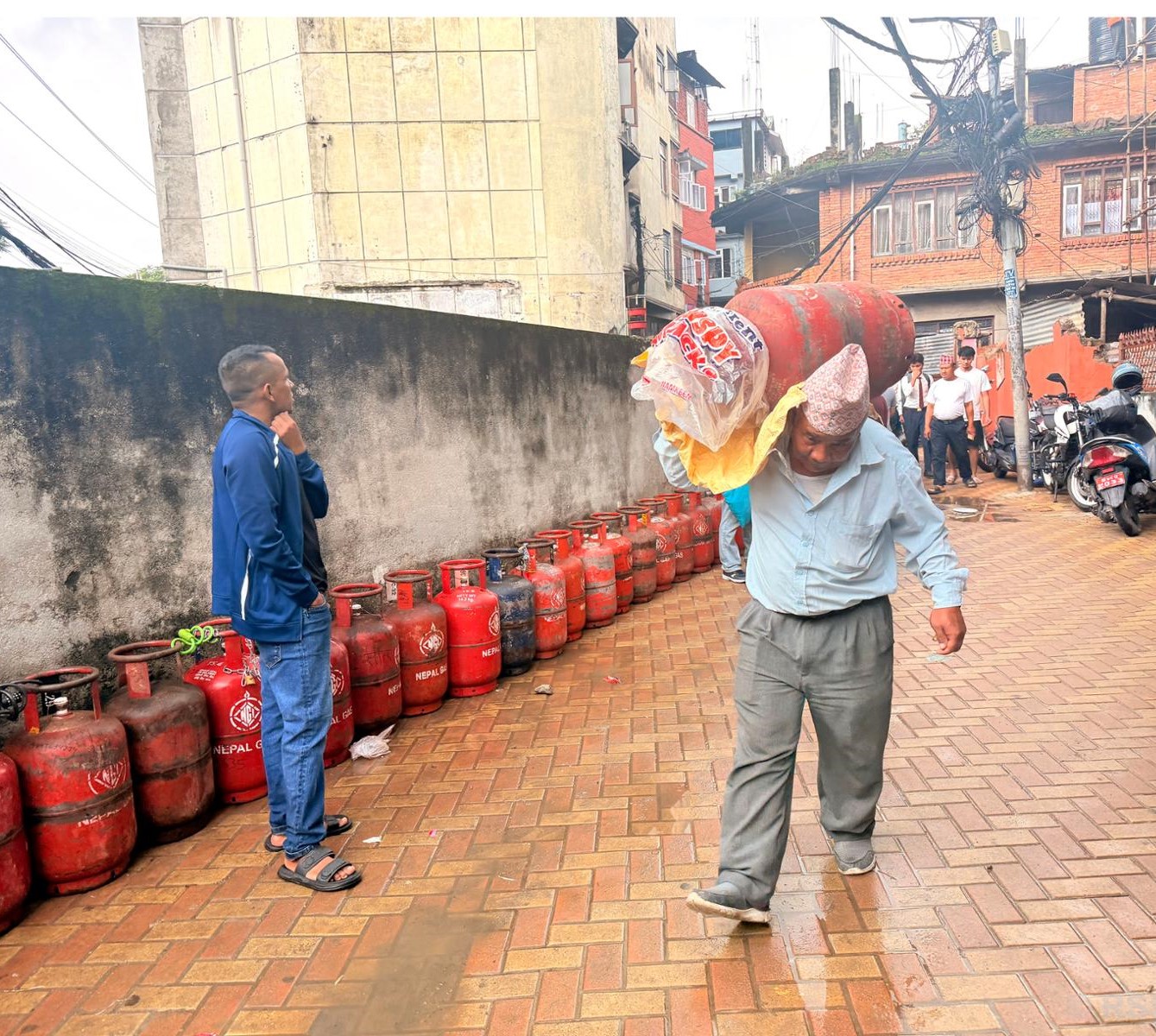
KATHMANDU: Despite government data showing that the supply of cooking gas in the Kathmandu Valley has exceeded demand, an acute shortage continues to plague the market. According to the Nepal Oil Corporation (NOC), gas imports have been consistently higher than the national monthly requirement of 45,000 to 46,000 metric tonnes.
NOC spokesperson Manoj Thakur stated that 57,000 metric tonnes of liquefied petroleum gas (LPG) entered Nepal in the month of Shrawan alone. Since Sept. 3, more than 24,000 cylinders have been entering Kathmandu daily. Despite these figures, the market has faced a severe shortage for the past six months. Analysts attribute this discrepancy to three primary factors.
First, issues within the supply chain from India. Although the NOC requested 60,000 metric tonnes monthly to address market shortages, the Indian Oil Corporation (IOC) has provided a maximum of 57,000 metric tonnes. Second, irregularities involving the NOC and distributors. Allegations of artificial shortages have led to black market prices reaching Rs 3,000 per cylinder. Minister for Industry, Commerce and Supplies Gauri Kumari Yadav resigned following her public criticism of these industry practices. The government has formed a ‘command post’ to monitor the market, but its effectiveness remains to be seen.
Third, consumer behavior has exacerbated the crisis. As soon as reports of shortages emerge, many households hoard multiple cylinders, leaving others without supply. The NOC reports that some families are holding four to five cylinders at once. While the government faces criticism for failing to ensure equitable distribution, officials also point to a lack of consumer awareness as a contributing factor to the current market chaos.