

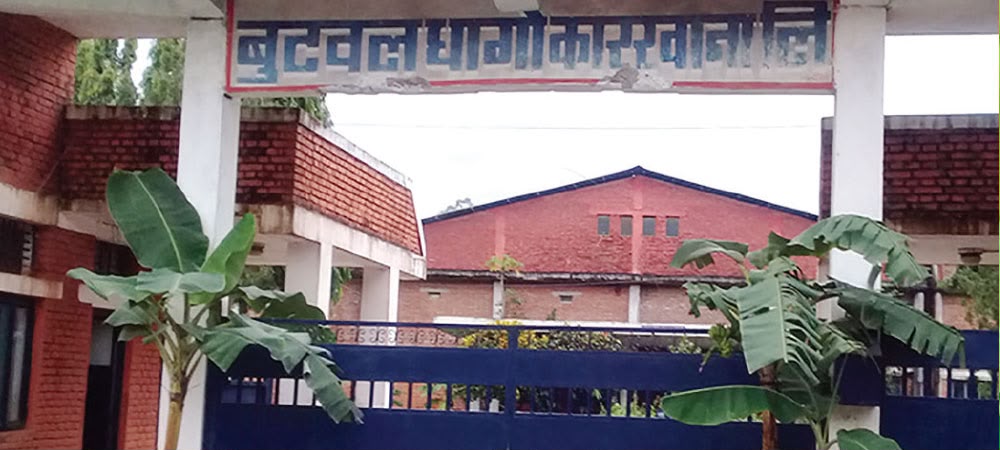
BUTWAL: The government has started the process to revive the long-shuttered Butwal Spinning Mill, raising hopes among industrialists and business leaders.
However, they have urged the government to move beyond another round of studies and prepare a clear plan for investment, management, technology and market access.
A five-member expert team formed by the Ministry of Finance has begun assessing the mill’s assets and liabilities. The team, comprising two engineers, two chartered accountants and a legal expert, started its field assessment on June 19.
The team is examining the mill’s buildings, machinery, production infrastructure, liabilities, market prospects and the investment required to resume operations.
The mill has also issued a public notice asking individuals and institutions with outstanding claims or liabilities based on court or other official decisions to submit their claims within 21 days. The process is expected to help the government establish the mill’s actual financial position.
Acting Chief of the mill Dolraj Sharma said industrialists and Indian technicians have also been assessing the condition of the machinery, potential repair costs and market prospects.
Business leaders have called for a clear operating model after the assessment. Hariprasad Aryal, president of the Butwal Chamber of Commerce and Industry, said the government should not attempt to operate the mill solely through state subsidies without assessing modern technology and current market conditions.
Shiv Gyawali, general secretary of the Lumbini Province chapter of the Federation of Nepalese Chambers of Commerce and Industry, said the mill could be operated under a public-private partnership model. He stressed the need for professional management free from political interference and clear performance targets.
Former chamber president and local shareholder Jeevan Prasad Ojha said much of the mill’s physical infrastructure remains usable. He proposed linking the Butwal Spinning Mill with the cotton industry in Banke and the Hetauda Textile Industry to create an integrated domestic textile production chain.
Construction of the mill began in 1982, and commercial production started in 1991. The factory was shut down in 2007 following management weaknesses, political interference and labour disputes. Spread over 144 ropanis, it became completely inactive after workers were dismissed in 2009. Only three employees and two security personnel currently remain.
The government’s next decision will determine whether the mill becomes an operating industrial asset again or remains another inactive state-owned property.