

KATHMANDU: Seeking to revive an economy weighed down by four consecutive years of weak development spending, the government has launched a strict budget implementation drive from the very start of the current fiscal year 2026/27 (2083/84 BS), directing all ministries and agencies to begin procurement without delay.
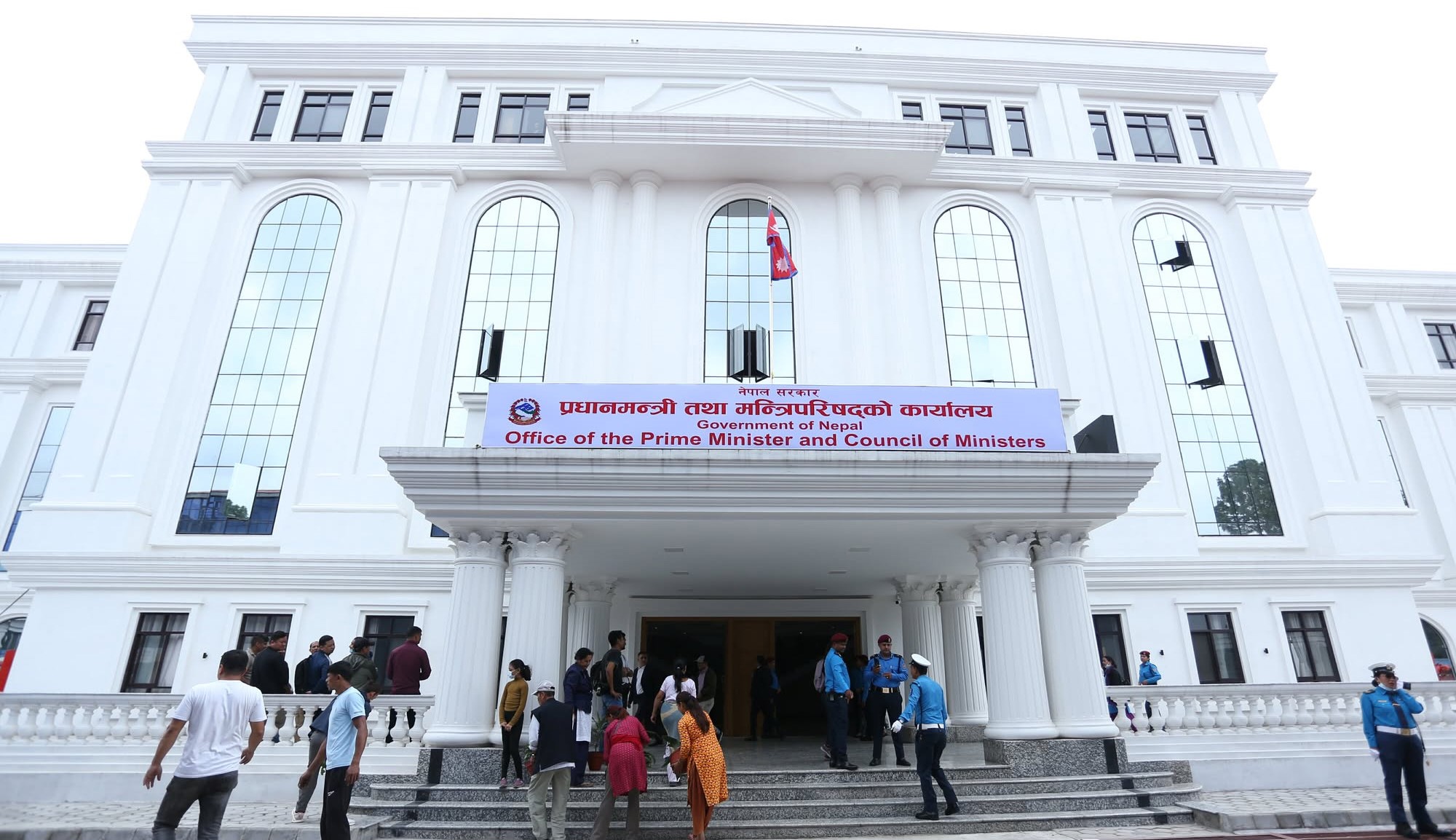
The Office of the Prime Minister and Council of Ministers has instructed all ministries to invite bids for projects and programs within the month of Shrawan, marking the rollout of the government’s new “zero-day procurement policy.” Under the policy, procurement for projects that have completed all preparatory work can begin immediately after the budget is approved, aiming to eliminate year-end spending rushes, procurement delays and chronic project overruns.
In a circular issued on July 21 (Shrawan 5), the Prime Minister’s Office directed ministries to launch procurement for all budgeted projects within the month. Ministries and their subordinate agencies have also been asked to submit weekly reports detailing project status, cost estimates, bid invitation dates and responsible officials, allowing the Prime Minister’s Office to directly monitor budget execution.
Four years of weak capital spending
Nepal’s economy has been slowed in recent years by persistently weak execution of development spending. Delayed procurement, heavy year-end expenditure, slow payments and prolonged project completion have undermined public investment and private-sector activity.
The construction sector has been among the hardest hit. Thousands of contractors involved in roads, bridges, drinking water, irrigation, energy and public infrastructure projects have faced cash-flow problems due to delayed government payments, leaving many unable to service bank loans.
The slowdown has also affected cement, steel, crusher plants, transport, heavy equipment suppliers and engineering consultancy firms, with industry representatives saying many businesses continue to operate well below capacity.
Banks, meanwhile, have experienced excess liquidity as weak private investment has reduced demand for credit, while rising non-performing loans have reflected financial stress among contractors and businesses. Economists say timely capital expenditure would inject liquidity into the market, stimulate private-sector activity and support credit growth.
Procurement law amended
The government’s efforts are also expected to be reinforced by recent amendments to the Public Procurement Act, which overhaul the long-criticized lowest-bid system.
Previously, contracts were largely awarded to the lowest bidder, often resulting in unrealistic pricing, delayed completion, abandoned projects and cost escalations.
The revised law allows greater weight to technical capability, quality and past performance, with the government expecting the changes to improve project execution and make procurement more efficient.
Rs2.12 trillion budget faces implementation test
The government has allocated Rs2.124 trillion for the current fiscal year, including Rs1.271 trillion for recurrent expenditure, Rs431.1 billion for capital expenditure and Rs422.6 billion for financing.
To support implementation, the Ministry of Finance has issued a 47-point budget execution guideline, requiring ministries and agencies to update the Line Ministry Budget Information System (LMBIS), prepare annual work and procurement plans at the start of the fiscal year, strengthen project monitoring, link payments to performance and maintain fiscal discipline.
The guidelines also call for stronger revenue collection, better protection of public assets and improvements to internal financial controls.
Last year’s weak performance
The government’s push for early procurement follows disappointing budget execution in the previous fiscal year.
According to the Office of the Financial Comptroller General, the government spent Rs1.582 trillion, or 80.55 percent, of the Rs1.964 trillion budget allocated for fiscal year 2025/26.
Capital expenditure remained particularly weak, with only Rs190.8 billion, or 46.79 percent, of the Rs407.9 billion allocation spent. By comparison, recurrent spending reached 88.4 percent, while financing expenditure stood at 92.56 percent.
Revenue collection also fell short of target. The government collected Rs1.241 trillion, or 83.87 percent, against a target of Rs1.48 trillion, while non-tax revenue and foreign grants also missed expectations.
Officials believe that if procurement for most development projects is completed within Shrawan, construction activity could accelerate from the first four months of the fiscal year, improving contractors’ cash flow, boosting industrial production, creating jobs, expanding bank lending and injecting liquidity into the broader economy.