

KATHMANDU: Nepal, which was the first country in South Asia to introduce 3G, now risks becoming one of the last in the region to roll out 5G.
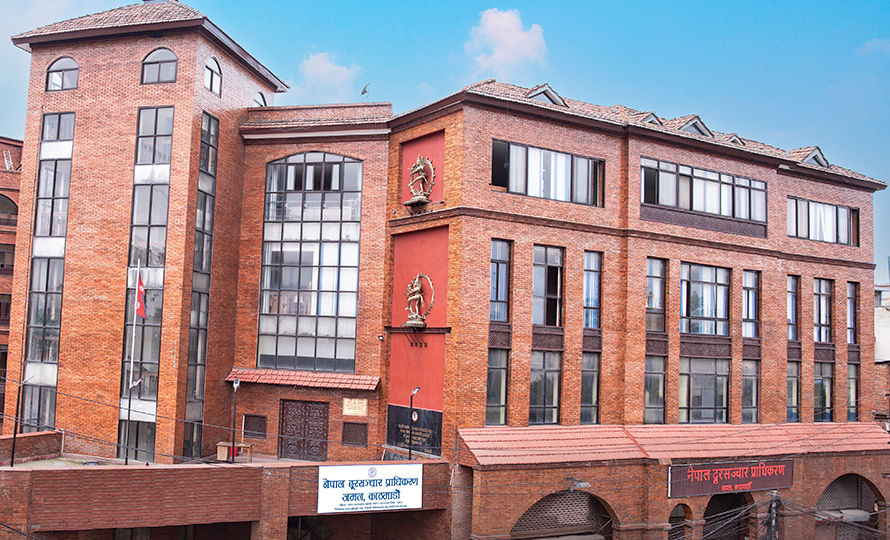
The Nepal Telecommunications Authority (NTA) has finally released a draft of its 5G roadmap, setting a target to bring 5G coverage across the country within the next nine years while improving Internet reliability and service quality. However, the roadmap offers limited clarity on the biggest question facing Nepal’s telecom sector: how operators will finance the massive investment required for 5G.
The draft, titled Mobile Broadband Enhancement Plan – Nepal’s Road to 5G, acknowledges that 5G will require substantial investment not only in new radio networks but also in fiber, high-capacity backhaul and supporting infrastructure. High capital and operating costs, expensive licenses and spectrum fees, and the risk of inadequate market revenue have been identified as major challenges.
The financial equation becomes even more difficult in Nepal’s mountainous and remote areas, where network infrastructure costs are significantly higher and recovering investment commercially is challenging.
To reduce costs, the NTA has proposed gradually shutting down 3G services by 2026, allowing operators to redirect resources toward newer technologies and reduce operating expenses.
The authority has also proposed allowing operators to initially deploy 5G under a Non-Standalone (NSA) model, using existing 4G infrastructure. While this could reduce the upfront investment burden, it could also limit the capabilities and quality of early 5G services.
Infrastructure sharing is another major component of the proposed roadmap. Fiber and backhaul infrastructure could be shared or placed under open-access arrangements, while operators could be required to share infrastructure where economically or geographically necessary. For remote areas, the draft proposes options including RAN sharing, neutral-host networks and local roaming.
The roadmap also proposes different deployment models depending on geography. Small cells would be used in densely populated urban areas to handle high demand, while fixed wireless access (FWA) could provide broadband in rural and underserved areas where fiber deployment is difficult.
A similar approach is proposed for backhaul. Fiber would be expanded in urban and accessible rural areas, while high-capacity microwave links would be used where fiber is difficult to deploy. The NTA warns that without adequate backhaul, 5G would be unable to deliver its full capacity and could effectively become only a higher-capacity version of 4G.
The authority has also proposed maximizing spectrum efficiency by making additional spectrum available, requiring carrier aggregation and introducing group-wise spectrum caps instead of individual band limits.
Revenue strategy remains unclear
While the draft contains several measures to reduce costs, its strategy for generating sufficient revenue from 5G appears considerably weaker.
The roadmap envisions using 5G beyond conventional mobile Internet for healthcare, agriculture, education, manufacturing, transportation and disaster management. In the longer term, it proposes commercializing services such as network slicing, private 5G and edge computing.
However, the draft does not provide clear financial projections showing how much revenue these services could generate, how quickly investments could be recovered or whether sufficient demand exists in Nepal to support such business models.
The authority itself acknowledges that weak-than-expected market growth could expose operators to significant financial risk.
The roadmap targets an average mobile broadband speed of 20 Mbps nationwide by 2027, 100 Mbps in metropolitan and sub-metropolitan cities by 2030, and nationwide 5G coverage by 2035.
The biggest problem is missing from the roadmap
Perhaps more importantly, the draft does not appear to address structural reforms to Nepal’s outdated telecom licensing and revenue model.
Despite ISPs increasingly generating stronger profits than traditional telecom operators in some segments, the existing regulatory structure remains largely unchanged. The draft does not adequately address high license fees, royalties and taxation, even though operators are already under significant financial pressure.
The economics of 5G are particularly challenging. Establishing 5G infrastructure in Kathmandu alone could require at least Rs 20 billion in capital expenditure, in addition to substantial recurring operating costs. A nationwide rollout could require at least Rs 50 billion, according to industry estimates.
Telecom operators, which have already been facing declining profitability and rising operating pressures in recent years, are unlikely to be financially prepared for such an investment under the current regulatory and market structure.
Nepal wants nationwide 5G by 2035, but its operators may not have the financial capacity-or a sufficiently attractive revenue model-to build it.
Unless the government addresses spectrum pricing, licensing fees, royalties, taxation, infrastructure sharing and the overall investment framework, Nepal’s 5G roadmap risks becoming a coverage target without a credible financing plan.