


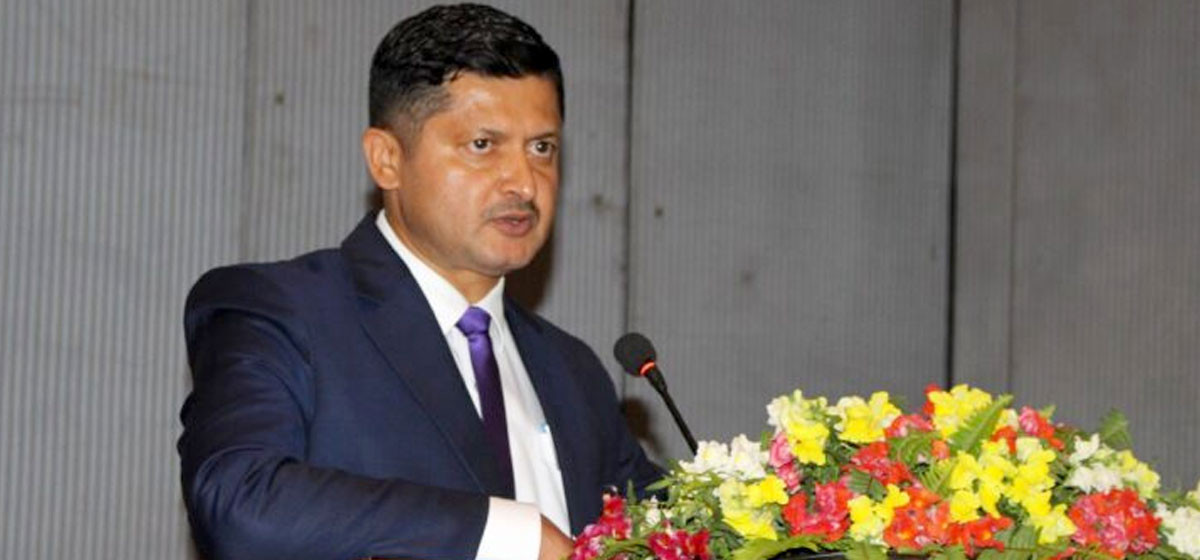
KATHMANDU: Executive Director of Nepal Rastra Bank, Guru Prasad Poudel, stated that the prevailing collateral-based lending system in Nepal has discouraged project-based financing.
Speaking at an event in Kathmandu, Poudel noted that approximately 67 percent of total credit in Nepal is currently backed by collateral.
Poudel argued that because banks can secure loans against fixed assets, they are less inclined to perform thorough risk assessments or evaluate the viability of projects. ‘We must shift from asset-backed financing to project-based financing,’ he said, adding that the current system makes banks complacent and discourages innovation in investment.
The central bank official also highlighted significant challenges in loan recovery, particularly regarding small-scale loans. ‘A narrative has been created that small loans do not need to be repaid, which is causing banks to struggle with recovery,’ Poudel said. He warned that difficulties in recovering existing loans ultimately restrict the flow of new credit. He further noted that obstacles in administrative processes, such as difficulties in verifying property boundaries at the local level, have exacerbated recovery issues.
Regarding the overall health of the banking sector, Poudel stated that the capital adequacy ratio stands at approximately 9.7 percent, which is above the regulatory minimum of 8.5 percent. However, he acknowledged that asset quality has faced pressure over the last few years. Currently, banks and financial institutions hold approximately Rs 57 billion in non-banking assets (NBA).
To address this, the government has initiated the process of establishing an asset management company as outlined in the current fiscal year’s budget. Poudel emphasized the need for better coordination and mutual understanding between regulatory bodies, investigative agencies, and law enforcement to resolve banking sector issues and restore confidence in the financial system.