

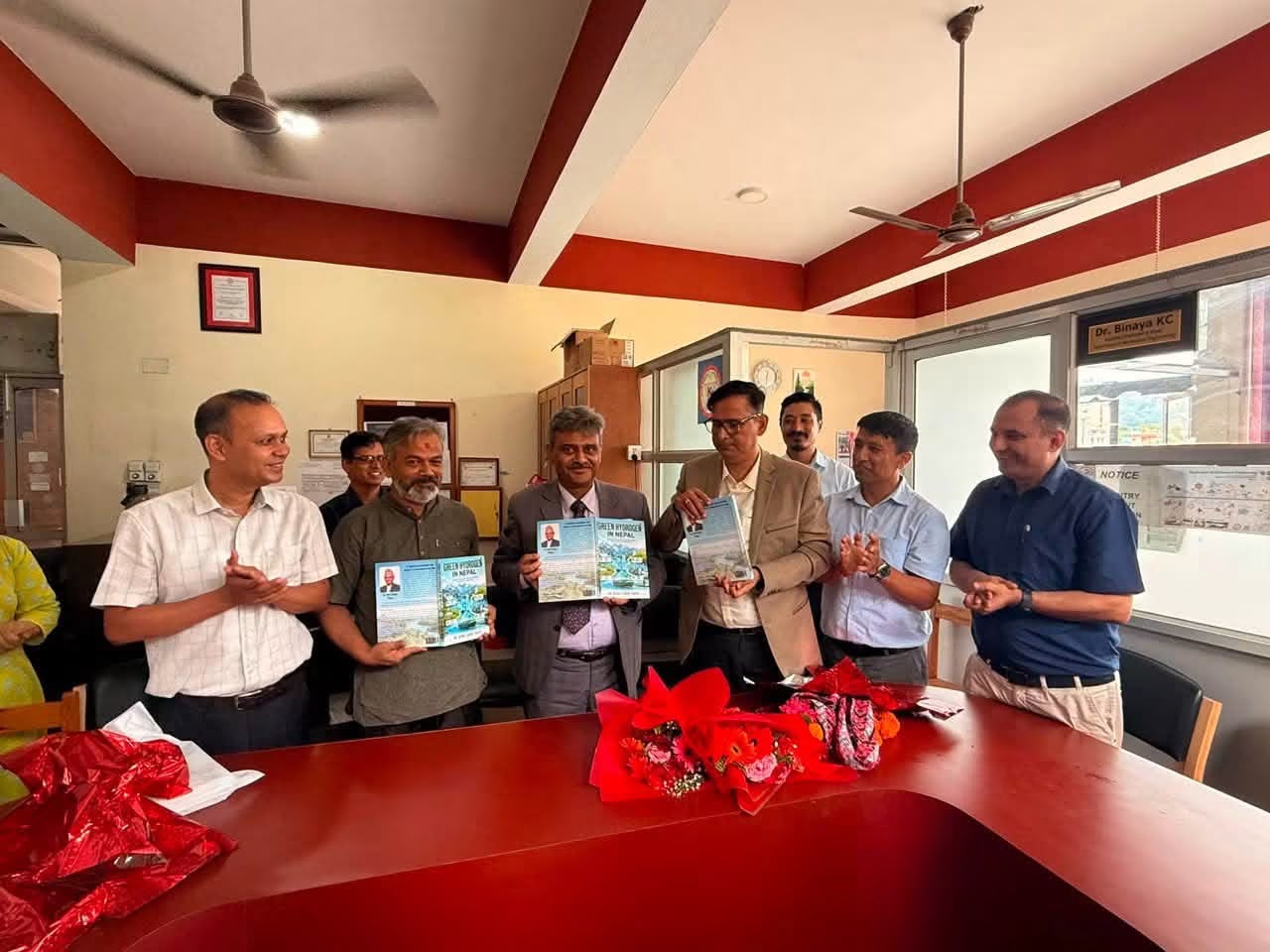
KATHMANDU: A research-based book examining the potential of green hydrogen to drive Nepal’s energy transition, industrialization and sustainable economic growth has been launched.
Titled “Green Hydrogen in Nepal: Strategic Pathways for Deep Decarbonization and Industrial Transformation,” the book draws on research conducted at Kathmandu University and collaboration with national and international partners.
The book was jointly launched by Prof. Dr. Bhola Thapa, Vice Chancellor of Tribhuvan University and former Vice Chancellor of Kathmandu University; Prof. Dr. Bibek Baral, Vice Chancellor of Kathmandu University; and Prof. Dr. Bhupendra Bimal Chhetri.
The book is authored by Dr. Biraj Singh Thapa, Associate Professor at Kathmandu University’s Department of Mechanical Engineering and head of the university’s Green Hydrogen Lab. Dr. Thapa has spent more than two decades working on renewable energy, hydropower, green hydrogen and industrial decarbonization, with a focus on research, technology development and policy studies.
Prepared through the collective efforts of researchers and students at the Green Hydrogen Lab, along with national and international partners, the book provides an extensive analysis of Nepal’s prospects for green hydrogen production, storage, transportation and industrial applications.
A major focus is on using Nepal’s abundant hydropower resources to produce green hydrogen, reduce the country’s dependence on imported fossil fuels and accelerate a clean-energy-based industrial transformation.
The publication comes as Nepal moves toward developing a national green hydrogen policy, introducing tax and other incentives, and advancing a 2.5-megawatt commercial pilot project. Against this backdrop, the book is expected to serve as a useful reference for policymakers, researchers, energy-sector professionals and the private sector.
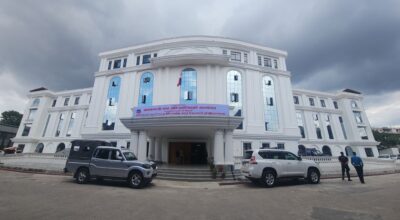
At the launch, Kathmandu University reaffirmed its commitment to further strengthening research, innovation and knowledge creation in renewable energy and green hydrogen, positioning the university as a key knowledge hub for Nepal’s emerging clean-energy economy.