

KATHMANDU: Nepal Telecommunications Authority (NTA) has recommended deploying small-cell infrastructure in dense urban areas to support the country’s planned 5G rollout, even as a similar initiative under Nepal Telecom’s 4G expansion remains incomplete.
In its draft 5G roadmap, the NTA said existing microcell-based networks may be adequate for conventional mobile broadband but could struggle to handle the sharp increase in data traffic expected with 5G.
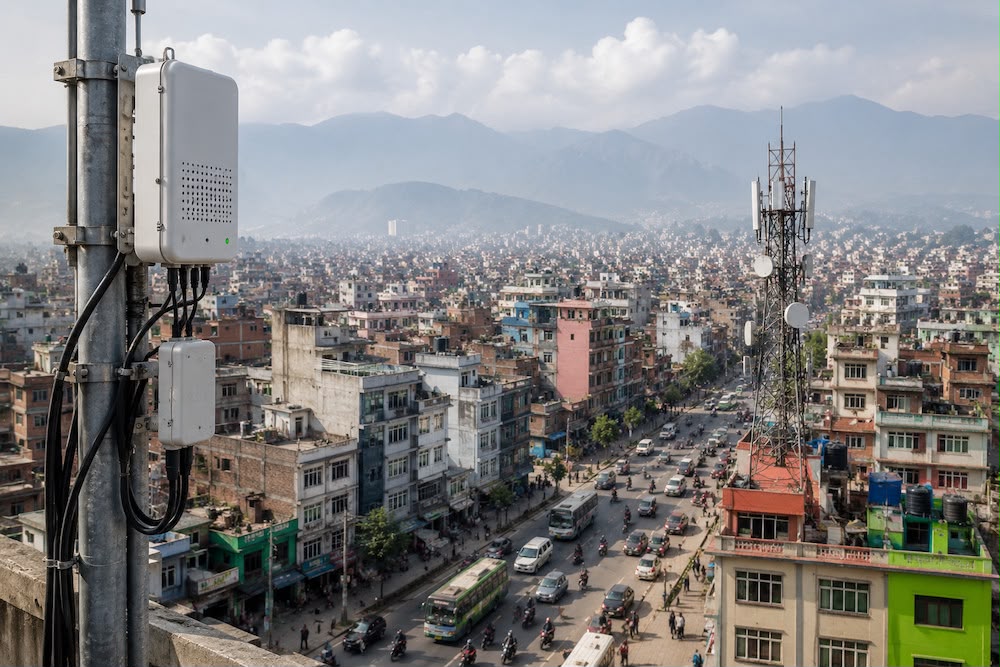
Small cells operate at lower power over shorter distances and can increase network capacity in high-traffic locations such as dense settlements, large buildings and busy commercial areas, while also improving indoor coverage.
Nepal Telecom had planned to install around 6,000 small cells under its roughly Rs 19 billion 4G expansion project. The small-cell component was estimated at around Rs 700 million, but the deployment has remained incomplete.
The project’s radio access network was awarded to Hong Kong-based CCSI, while Chinese company ZTE was contracted for the core network. CCSI is associated with Huawei.
The NTA has proposed using streetlights, buildings and other existing infrastructure to deploy small cells and promote infrastructure sharing, particularly in dense urban areas.
However, the roadmap cautions that simply adding small cells will not automatically improve 5G performance. Adequate high-capacity fiber and backhaul infrastructure will be essential to carry the additional traffic generated by 5G networks.
The NTA has therefore identified small cells, infrastructure sharing and stronger backhaul capacity as key components of Nepal’s 5G network strategy.